
Kazakhstan. Kyrgyzstan. Tajikistan. Turkmenistan. Uzbekistan.
Known collectively as “the Stans,” these five countries are former Russian territories and were once part of the historic Asian Silk Road trade route. Their common suffix of “-stan” means “land” and refers to the homeland of their respective inhabitants: the Kazakhs, Kyrgyzs, Tajiks, Turkmens, and Uzbeks.
On our fourth circumnavigation of the globe, we visited four of these countries, spending several wintery weeks in Kazakhstan, Kyrgyzstan, Tajikistan, and Uzbekistan.
Sadly, all many Americans know of Kazakhstan comes by way of Borat, Sacha Baron Cohen’s two mockumentary films featuring a fictional Kazakh reporter. The largest of the Stans, the Republic of Kazakhstan is actually a richly diverse culture that has both European and Asian influences as well as land located on both continents. Geographically, it’s the ninth-largest country on the planet and the world’s largest landlocked country, although it features plenty of water including the Ural River and the Caspian Sea, which is actually the world’s largest lake.

In Kyrgyzstan, the word Kyrgyz is derived from the Turkic word for “we are forty,” believed to refer to the forty clans of Manas, a legendary hero who united them all in the 7th century. It’s such an important part of Kyrgyz history that one version of an epic poem telling the tale has more than 500,000 lines.

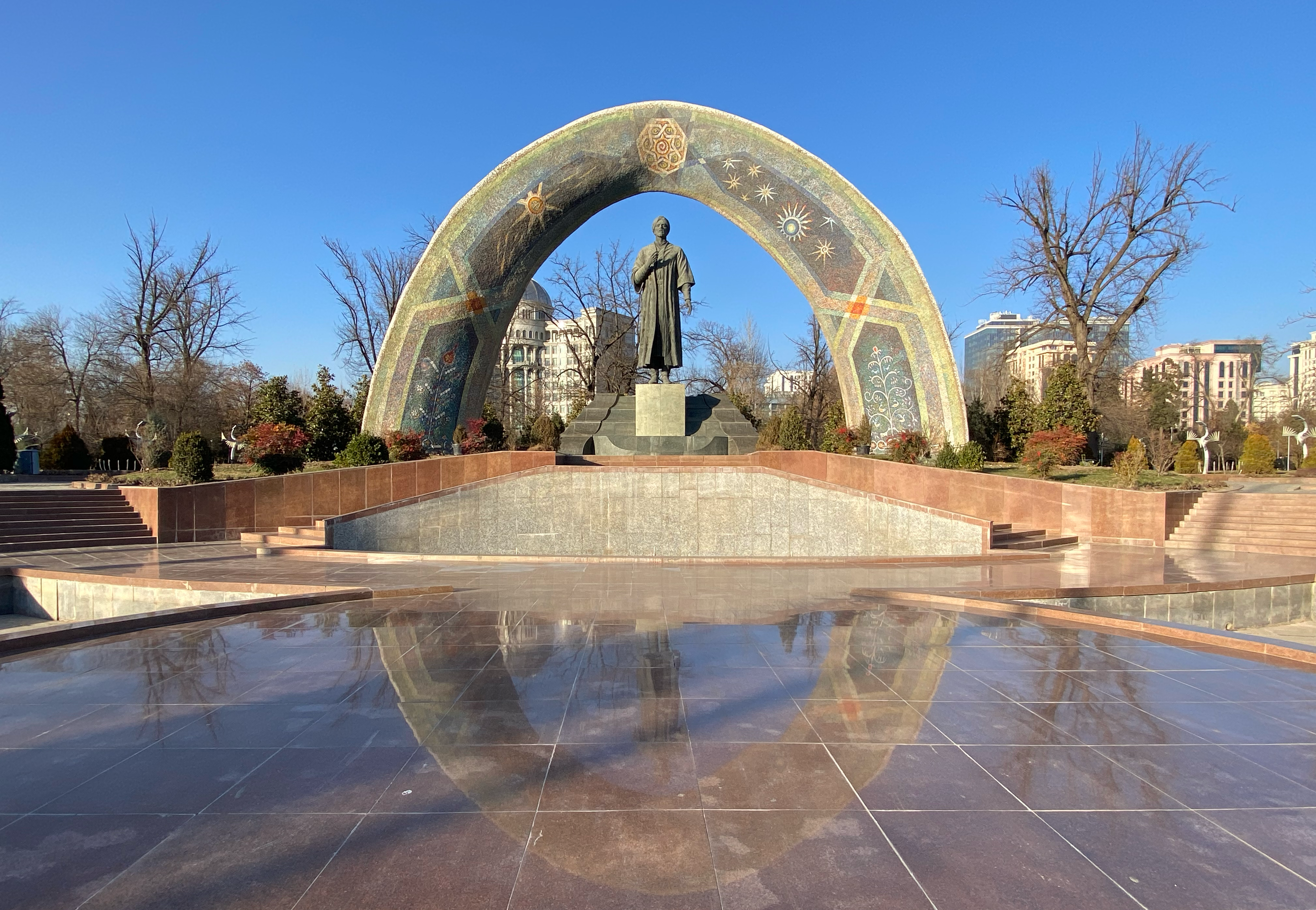
Tajikistan has been inhabited since at least the fourth millennium BCE. Despite being Central Asia’s smallest nation, it has the highest mountain peaks in the region as well as beautiful lakes. It’s a predominantly Muslim country, and many visitors attend buzkashi matches, where competitors on horseback play a version of polo that involves a dead goat.

The Republic of Uzbekistan is famous for its role in Silk Road history, with ancient cities like Samarkand, Tashkent, Bukhara, and Khiva playing prominent roles in international trade between 100 BCE and the mid-1400s CE. But that isn’t the country’s only claim to fame. Uzbekistan is one of only two doubly landlocked countries on Earth — meaning it is surrounded by countries that are themselves also landlocked — which means that buyers and sellers had to come to the Uzbeks by land rather than by sea. (Liechtenstein is the other.)

As former members of the Soviet Union, major cities in these four countries feature lots of Brutalist architecture with its exposed concrete and stark geographic forms. That may be lovely in the spring and summer, when the buildings are softened by the surrounding contrast of lush landscaping, but cloaked in nothing but gray skies and melting winter snow, it can prove somewhat depressing.
To make things a bit more interesting, we built our walking routes around quirky destinations like the world’s second-tallest flagpole in Dushanbe and the amusement park at the top of Almaty’s Kök-Töbe Hill with its bronze Beatles statue and knock-off Madagascar mini-zoo.
But it was still cold and gray, and we’re looking forward to returning to the Stans in sunnier weather.


Leave a Reply