
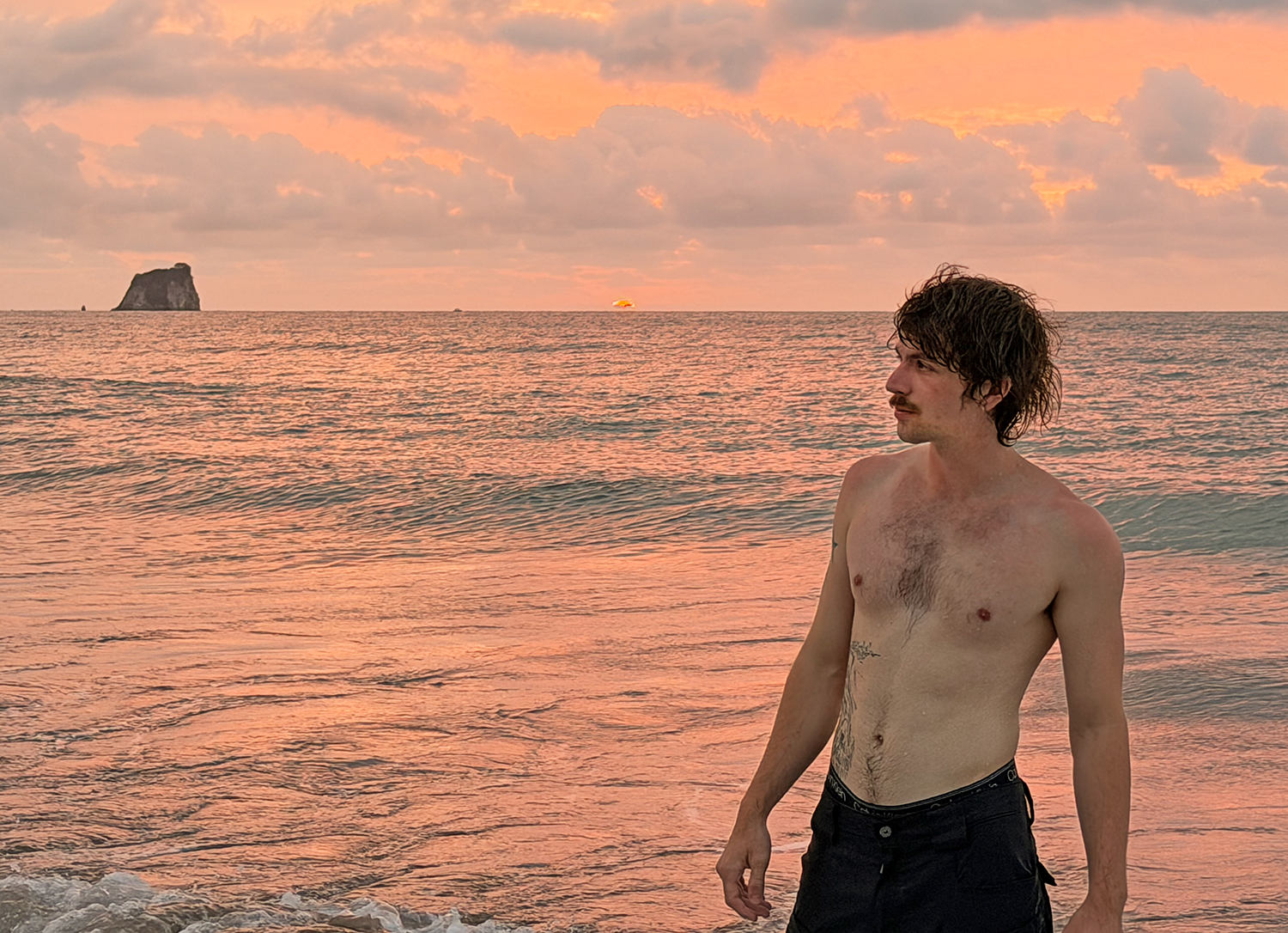
My younger son, Ben, and I recently traveled up the Amazon and Napo rivers, crossing the entirety of South America from east coast to west, through Brazil, Colombia, Peru, and Ecuador by a series of boats, buses, cars, and even a tuk-tuk or two. I’m going to share our experience so you can be prepared if you would like to attempt the same.
Although the overland adventure actually began in Salvador, Brazil, continuing up to São Luís accompanying several members of NomadMania, this trip report will focus on the Amazon portion of the crossing that Ben and I did on our own.
We started in Belém and crossed all of the Brazilian Amazon to the border city of Tabatinga by slow boat, stopping along the way in Macapá, Santarém, and Manaus to rest and resupply. In Tabatinga, Brazil, we crossed the very porous triborder to Leticia, Colombia, and then on to Santa Rosa, Peru, where our river journey continued using fast boats of various forms until we reached Coca, Ecuador. This is where the navigable river essentially ends and the road trip to the west coast begins.
For this trip report, I will break the journey down into each leg, including information not only for the boats but also for our stops in each city and village along the way.

Overview
As I said, this trip was aboard various slow-moving supply boats and fast ferries and was not a luxury cruise by any means, although those options do exist. This trip also took place in July and August, just after the rainy season, making the river very full and moving swiftly, so our travel times took a bit longer than normal as we fought against the current.
There is not one single boat that travels the entire route, so you will have to book each leg of the trip separately between the main cities I mentioned earlier. But there are multiple vessel options for each leg leaving almost daily, and there is no such thing as a standard ship. They all differ in size, price, cleanliness, amenities, and even operating procedures.
While it is possible to book some legs online (we used BrazilBooking.com for three of the boats), you can also simply arrive at the port and book your ticket in person, even on the day of travel.
There are also multiple booking agents at each port selling tickets for the same ships at essentially the same prices. Just let them know where you want to go and on what date, and they will present your options.
A word of caution. While nearly every vendor in Brazil accepts credit and debit cards, the machines often don’t work. And you should not rely on ATMs to get quick cash as many of them will refuse foreign cards or will have simply run out of cash to dispense. Have local currency on hand to buy your tickets just in case. You will need cash on most boats anyway to make purchases from the bars and snack shops, which are quite affordable at about US $3 for a beer.
Hot water doesn’t exist for most of this trip. Even if you’re staying in an upscale hotel in the major cities, you likely won’t get a hot shower. Just so you know.

Travel Time
We scheduled a generous six weeks to complete the crossing and, miraculously, hit that mark within a couple of days. Going upstream will definitely add days to your journey, and the boat departures change without warning. A boat scheduled to leave on Monday morning may not depart until late that same night. Or until Tuesday. And the schedule gets increasingly fluid the further up the river you go, so plan accordingly.
Accommodation on Slow Boats
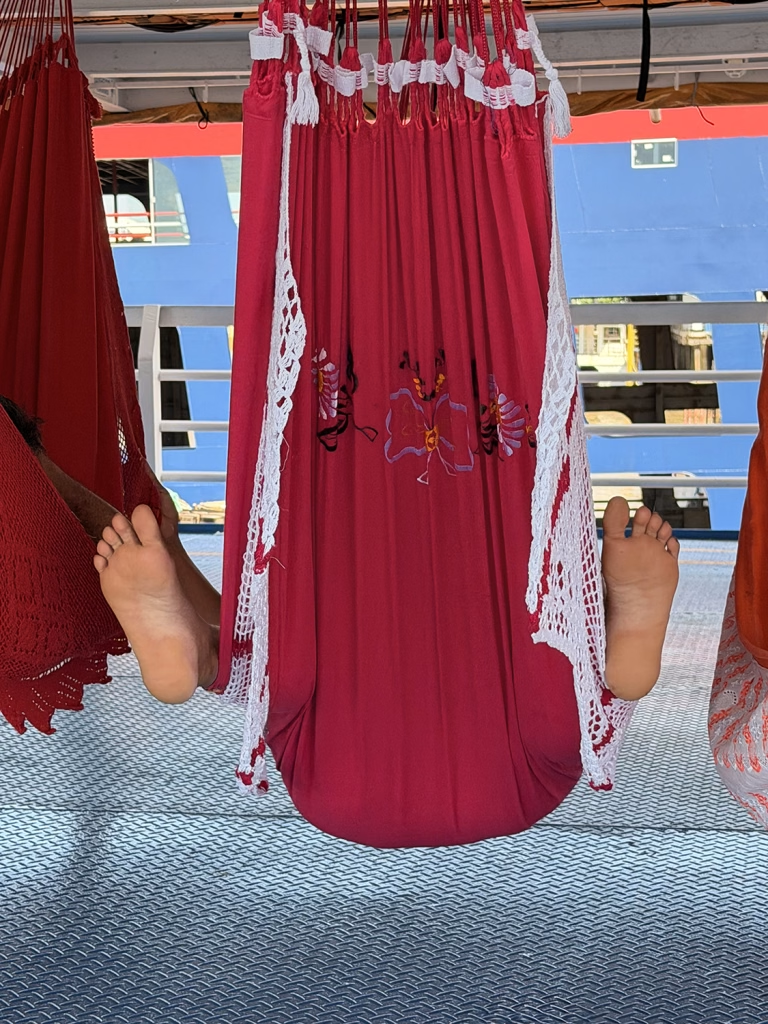
Almost all slow boats have two options for accommodation: a hammock space or an air-conditioned cabin. We wanted to experience both, so we opted for hammocks on the first two slow boats and stayed in a cabin for the next two.
Although every port and many boats sell affordable hammocks on the spot, we brought our own ultralight hammocks from home that included full-wrap mosquito nets. But it turns out that mosquitos weren’t a problem for us at all, even during July. The tiny black midges, however, were a menace for me as they were undeterred by nets, clothing, or insect repellant.
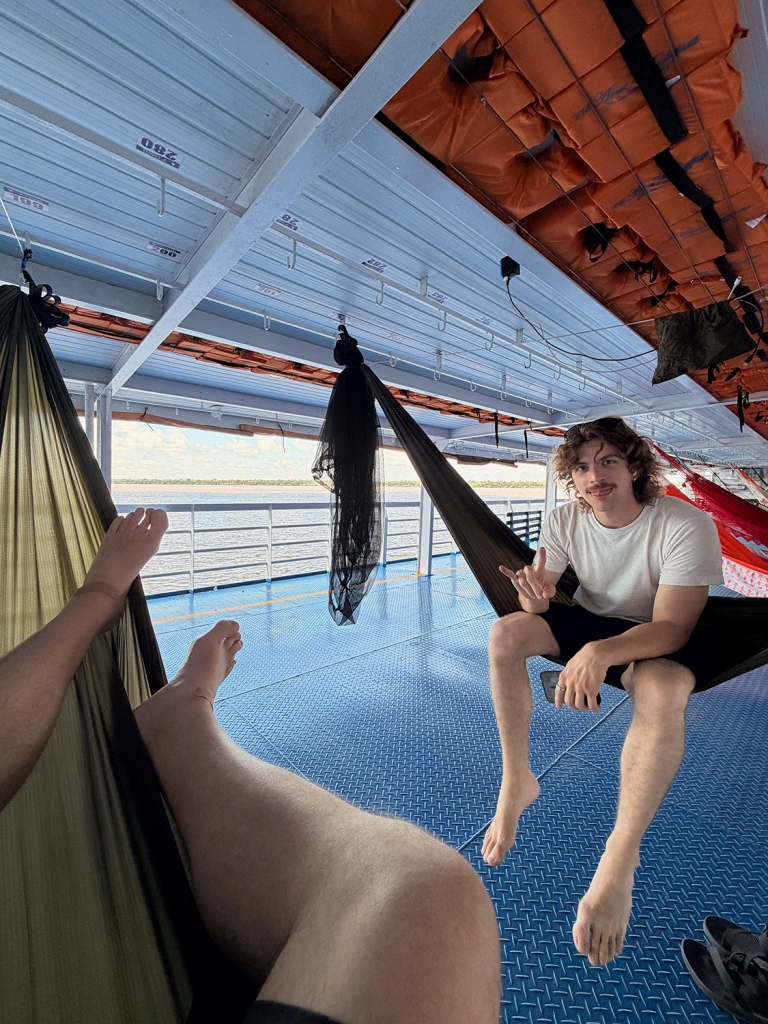
The hammock areas are very much a shared community. Although there are numbers posted on the mounting hooks designating what constitutes a hammock space, no one adheres to any rule that we could observe. The earlier you get on board, the better chance you have to claim a good location for your hammock. Somewhere toward the bow to cut down on engine exhaust and away from the walkways and bathrooms is preferable. Otherwise, people will accidentally bump into you as they move about throughout the night.
On many boats, there are at least two large hammock halls. One is typically enclosed on a lower deck, and the other is open on a higher deck. We did see one boat that had an air-conditioned hammock space, but we didn’t count on that. The enclosed hammock hall gets quite crowded and, without the AC running, can get stiflingly hot.
Ben and I opted for the open space on both legs where we used hammocks. Although the afternoon sun is brutal, there was almost always a pleasant cross breeze that made it tolerable. You will sweat for the first half of the night, but the second half can actually get chilly, so have socks and a light blanket at the ready.
Be aware that there aren’t many places to sit on most boats. If you’re in a hammock space, you’ll spend most of the day trying to sit comfortably in your hammock or on the few wooden benches provided. If you’re in a cabin, you’ll be sitting uncomfortably on the metal edge of the lower bunk. After the first leg, we added folding camp chairs to our supplies, and they made a world of difference.
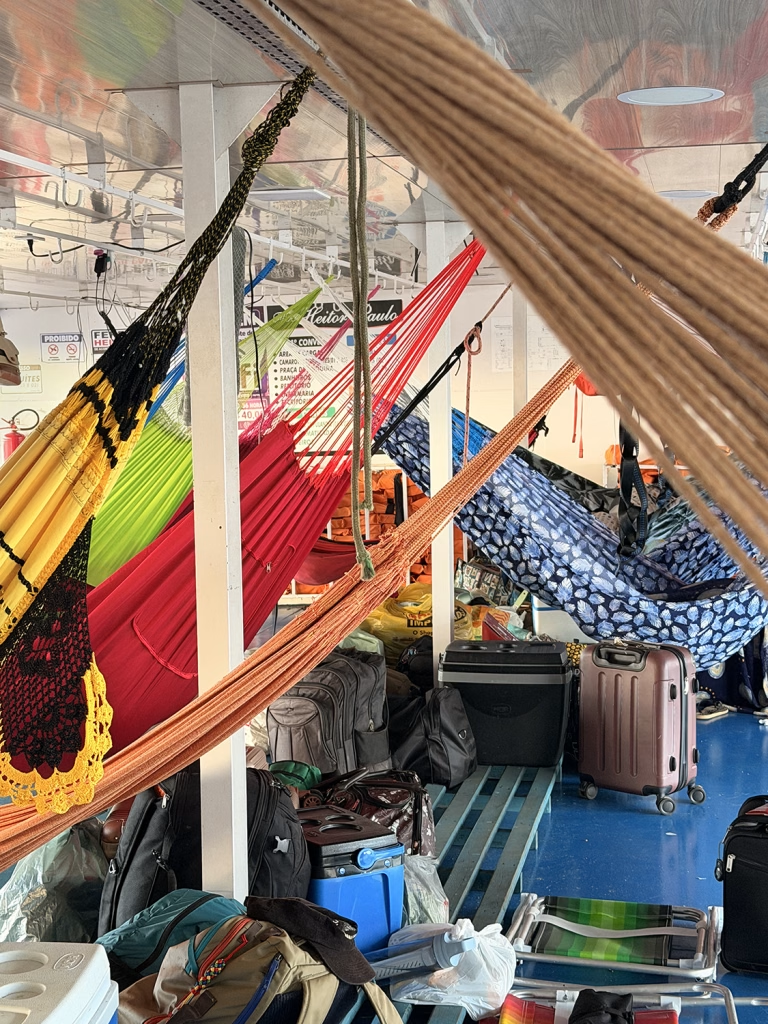
Since the hammock halls are a shared accommodation, everyone will have their luggage and bags in the space as well, and the whole floor tends to become cluttered with stuff. Although we didn’t experience any nefariousness, other passengers warned us about the potential for theft, especially during the frequent stops at small villages along the way, saying that people would grab a bag and get off the boat before you could notice it was missing. We had a couple of thin cable ties and luggage locks to secure our things, but mostly we just stayed diligent and didn’t have a problem.
The cabin option solves most of these issues but creates a whole other set of concerns.
First, cabins come at a premium, costing considerably more than the hammock spaces. Sometimes as much as five times the price.
Second, while you typically do get air conditioning with a cabin, most are set to 22 degrees Celsius (71 degrees Fahrenheit) and don’t have a remote to change that. While this makes it quite comfortable at night, the AC can’t keep up with the heat of the day. And, without a breeze, this makes the cabin much like the hammock space: hot during the day, cool or cold at night.
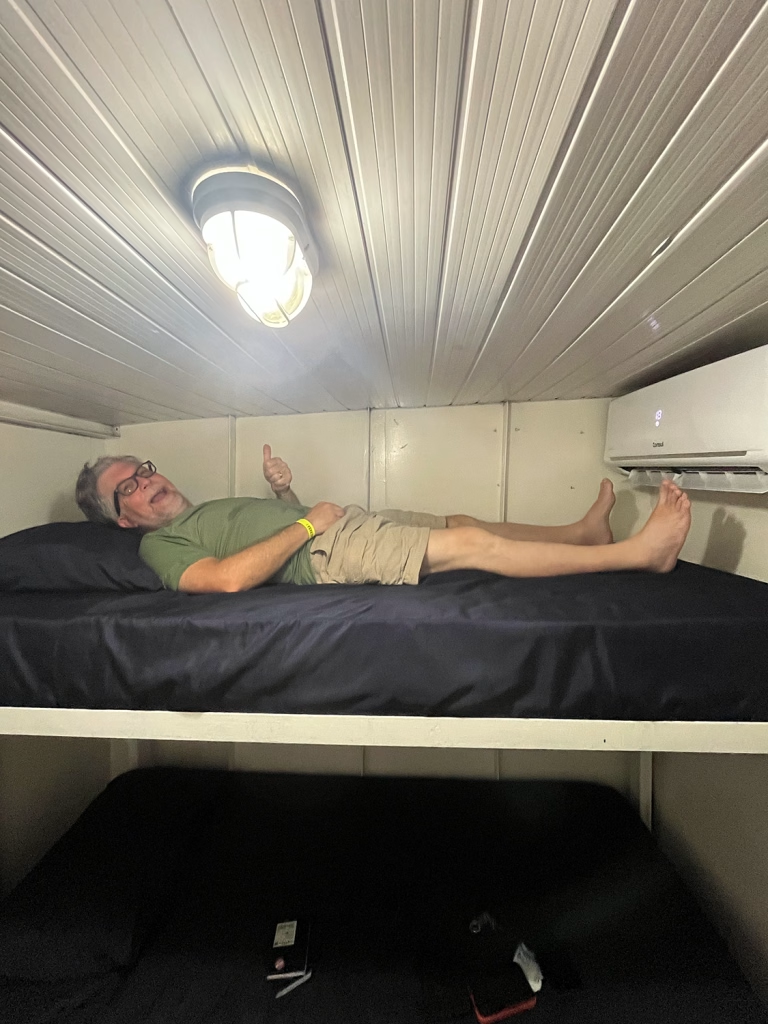
Third, cabins often come with a private toilet and shower, but not always. Since this is one of the best potential amenities, ask the ticket agent during booking to be sure.
There will almost always be at least two meals per day with the possibility of three. Sometimes the meals are included in the cost of the ticket. Otherwise, you will need to pay around US $5 per service. And this is never really clear until you’re onboard, so have cash on hand. Also, meal times vary from boat to boat, and they don’t always announce when it’s served. When they run out of food, you run out of luck, so be sure to get in line as soon as you notice others going that way.
All meals will be served buffet style and typically consist of rice and/or noodles with beans and chicken or beef. Plates and cutlery are provided if you eat at the neighboring dining tables, but this space tends to be quite hot. Pro tip: bring a reusable bowl and plastic utensils on board with you so you can serve yourself a meal and take it back up to the higher decks for the breeze.
Accommodation on Fast Boats
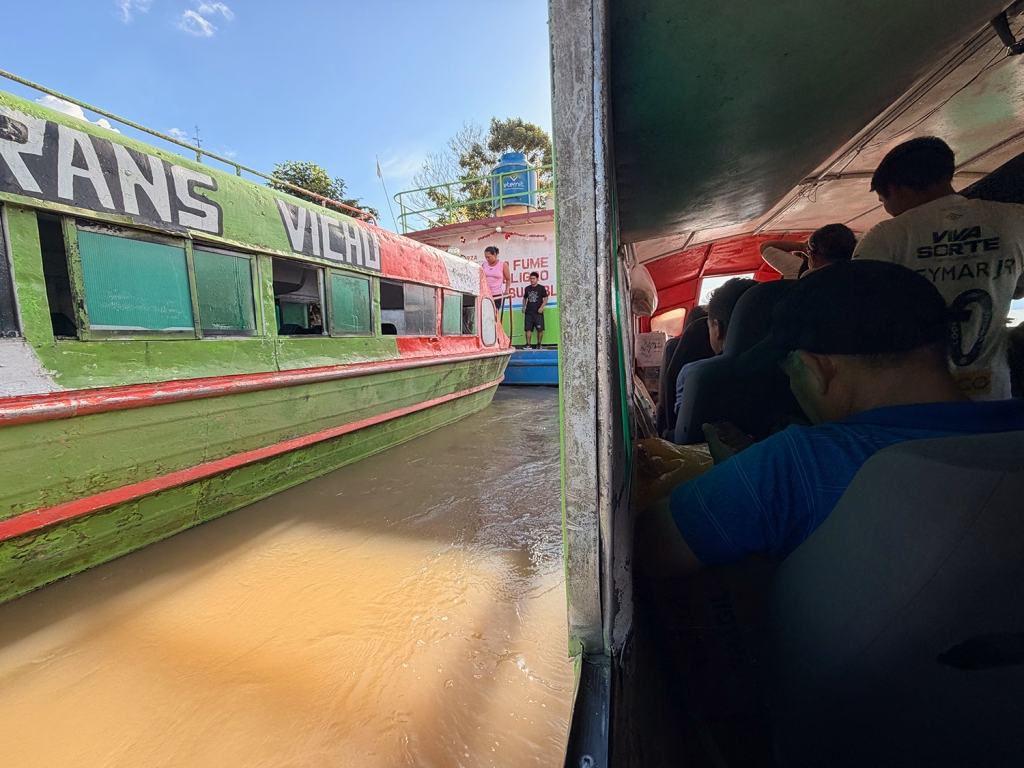
You get a seat, and that’s about it. Sometimes the seats are assigned and reserved; sometimes they are not. Sometimes they recline; sometimes they do not. Sometimes there is air conditioning; sometimes there is not.
Your larger bags will either be stored on top of the boat (usually under a tarp) or in the back near the engines. Either way, they will likely get damp from the rain/humidity/spray, so be prepared for that. Smaller bags (think personal items/carry-ons for most airlines) will fit in overhead storage on the boat.
There is never a meal provided unless the boat captain is running behind schedule and decides to stop for the night. In that case, meals can be purchased in the village at local homestyle restaurants. On occasion, villagers will quickly board the fast boat at various stops and provide homemade snacks for purchase. Buy them. Seriously. Pe de moleque (peanut brittle), empanadas, and various fruits are the typical offerings. It’s some of the most delicious food I’ve ever experienced, and it’s critical for the local economies.
There is typically a single-stall toilet at the back of the boat, but there likely won’t be a sink and certainly won’t be a shower. You’ll be very glad you brought your own toilet paper.
Port Fees
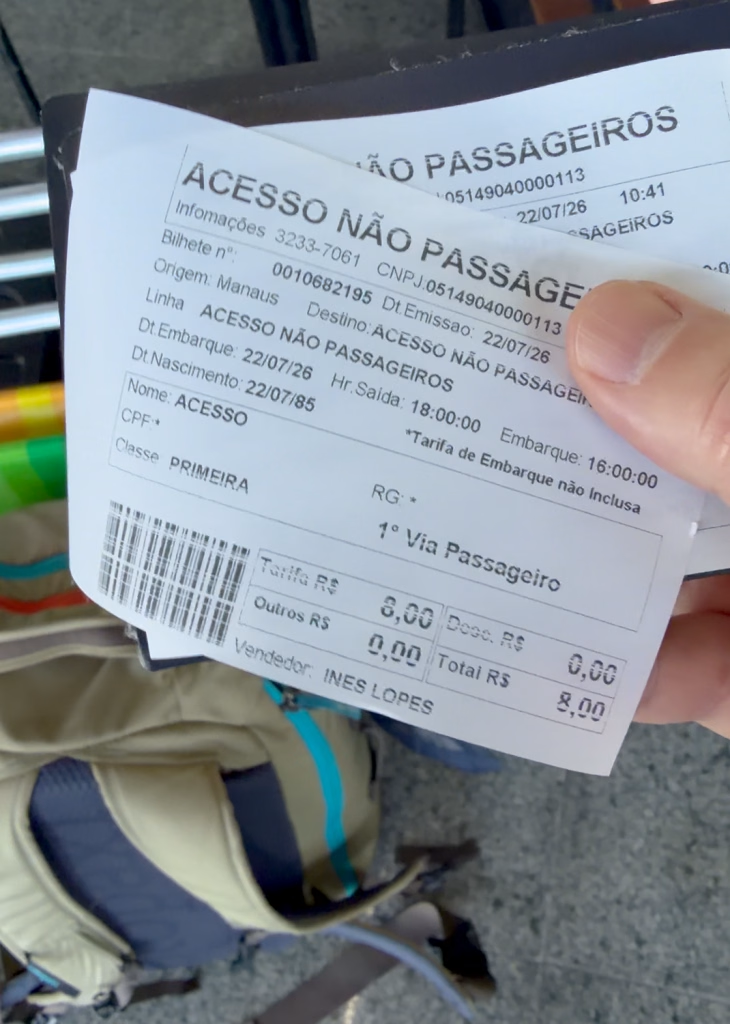
Although you may already have your ticket in hand, almost all ports in Brazil have an additional fee that isn’t included. The specific processes and prices differed in every major city, and there is no clear signage indicating where to go to pay this fee. But security won’t let you into the loading area until they see that you’ve paid it.
Look for signs that say “Agência de Passagens” or “taxa de embarque.” The cost is only about US $2 per person, but you can’t board without it.
Essential Items for All Boats and Shore Accommodations
- Cash in local currency and plenty of it, as ATMs are rare on this journey
- Drinking water or, better yet, a filtered water bottle
- Snacks, and a plan to resupply yourself whenever you have a chance
- A light blanket
- A travel pillow
- Ear plugs
- Soap and other toiletries
- Toilet paper
- A portable, rechargeable fan, regardless of whether you’re in a hammock or a cabin
- A well-sealed food bag, as the resident ant colonies will infest whatever they can find
Disclaimer
The following details of each leg are for the boats/villages/hotels/dates/directions/regulations of our trip during July and August of 2026. Things change often on this route and without warning, so do your own research and don’t hold me to blame if what I say here doesn’t match your experience. Peace!
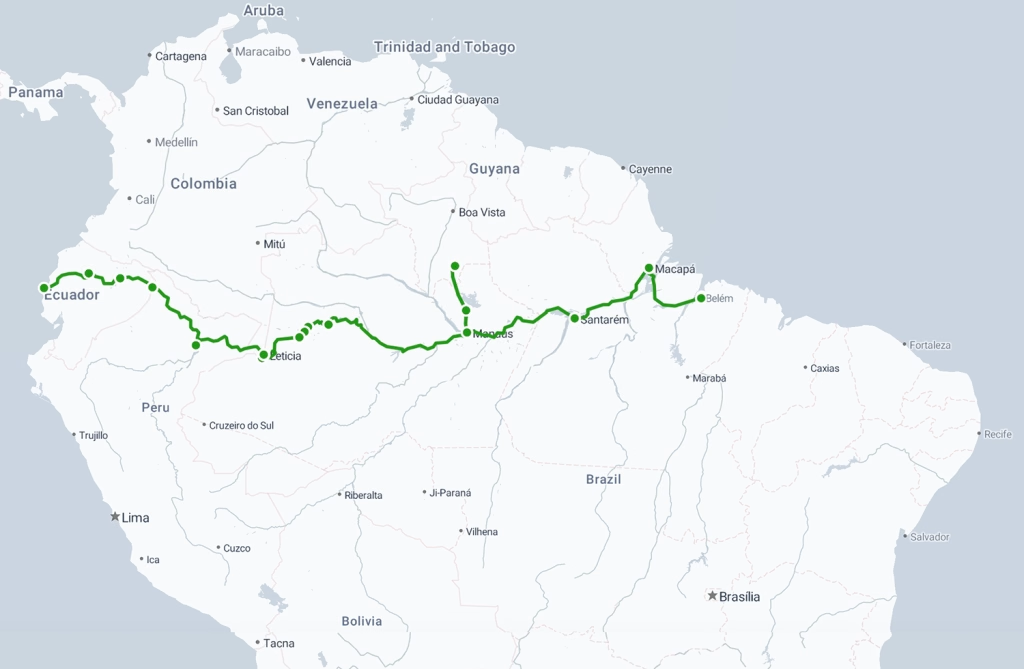
Our Journey, Complete with Each Travel Leg and Stop
- Belém (3 nights)
- Belém to Macapá (24 hours via slow boat: Ana Marques)
- Macapá (1 night)
- Macapá to Santarém (36 hours via slow boat: Heitor Paulo)
- Santarém (3 nights)
- Santarém to Manaus (56 hours via slow boat: Itaberaba I)
- Manaus (1 night)
- Side Quest to Presidente Figueiredo and the Equator (5 nights)
- Manaus to Tabatinga/Benjamin Constant (7 days via slow boat: Voyager V)
- Benjamin Constant to Tabatinga (About 45 minutes via fast boat)
- Tabatinga/Leticia/Santa Rosa Triborder (4 nights)
- Leticia to Santa Rosa (15 minutes via local water taxi)
- Santa Rosa to Iquitos (18 hours via fast boat: HAYDEE)
- Iquitos (6 nights)
- Iquitos to Cabo Pantoja with overnight in Santa Clotilde (total of 36 hours via fast boat: Trans Vichu)
- Iquitos to Indiana (45 minutes via fast water taxi)
- Indiana to Mazán (30 minutes via tuk-tuk)
- Mazán to Santa Clotilde (8 hours via fast boat: Trans Vichu)
- Santa Clotilde (12 hours overnight)
- Santa Clotilde to Cabo Pantoja (14 hours via fast boat: Trans Vichu)
- Cabo Pantoja (1 night)
- Cabo Pantoja to Nuevo Rocafuerte (2.5 hours via motorized canoe)
- Nuevo Rocafuerte (1 night)
- Nuevo Rocafuerte to Coca (aka Puerto Francisco de Orellana) (11 hours via public fast ferry: Pinta Brava)
- Coca (aka Puerto Francisco de Orellana) (1 night)
- Coca to Quito (9 hours via bus)
- Quito (1 night)
- Quito to Atacames (6 hours via rental car)
- Atacames (2 nights)
- Back to Quito and Departure (1 night)

1. Belém (3 nights)
Belém is a wonderful, modern city. We stayed at the Rede Andrade Docas Hotel (US $58/night) near lots of restaurants and bars. There is a recently-revived waterfront nearby with craft breweries and plenty of shopping. We visited a well-stocked grocery store to supply ourselves with beverages and snacks for the first leg of our river journey.
Beef jerky is a key travel snack for us, but, despite Brazil being known for its meat offerings, we couldn’t find any for the trip. Apparently, this isn’t a thing in Brazil. So, we settled for various nuts and other protein-rich products.
2. Belém to Macapá (Santana) Slow Boat (24 hours)
Boat Name: Ana Marques
Price: US $50 per person for a hammock space
Departure Port Name and Location: Porto Mega (Av. Bernardo Sayão, 2050 – Jurunas, Belém – PA, 66030-120, Brazil) (1°28’38.1″S 48°29’12.6″W)
Accommodation: Two hammock spaces. There is an air conditioned hammock deck, but we stayed outside.
Meals for purchase (US $5)
Arrival Port and Location: Porto Norte (Margens do Rio Amazonas, Área Portuaria – R. Cláudio Lúcio Monteiro, 700 – Fundos – Comercial, Santana – AP, 68925-118, Brazil) (0°03’28.8″S 51°10’29.0″W)
The Oliveira website (https://www.navegacaooliveira.com/) lists departure days and times for this boat and says that it travels between Belém and Santana, which is just south of Macapá. We booked directly with the ticket office at Porto Mega and asked specifically if it went all the way to Macapá. The agent assured us that it did, but apparently Macapá and Santana are synonymous for this voyage as it does, in fact, arrive in the town of Santana. So, expect a 30-minute cab ride when you disembark.
Because this was the first leg of our journey, we went to the port a full day before we wanted to leave in order to buy tickets and scope the place out. The ticket office is rather nondescript, tucked away at Porto Mega. During our reconnaissance visit, the waterfront didn’t look like it could accommodate a ferry landing. The bank was steep and muddy, with logs and other debris seeming to block the way. But the ticket agent guaranteed that the boat would be in this very spot the next day.
There is a high wall on the river side of Avenue Bernardo Sayão with painted signs indicating various departure ports. Almost all passenger slow boats leave from Porto Mega, but double-check with your ticket agent. You will walk through a gate to find a covered waiting area but no real indication of where the boat is docked. As there are typically several boats departing on any given day, and because they are usually docked close together making it difficult to see the names, you might want to ask for directions to your specific boat.
We arrived about two hours early for our noon departure on the Ana Marques and boarded by a metal walkway into the cargo hold. As far as we could tell, there is no set time to board the slow boats. Basically, if the boat is docked and cargo is being loaded, you can go ahead and enter.
Forklifts and small commercial trucks will be operating at the same entrance, so be sure to stay on the pedestrian path. Once onboard, there was a table set up near the stairs where two people were checking tickets against the manifest. After you show them your ticket, be sure to keep it in a safe place as they may come around to check it again after major stops along the way. Also, you will see hammocks for sale as you climb the stairs.
The Ana Marques has four decks: the main cargo deck where you enter and where the cafeteria is located, the second deck which contains the enclosed air-conditioned hammock hall, the third deck where the open hammock space is located, and the top deck which is simply an observation deck open to the sky. Decks two and three both have bathrooms and showers with access to a filtered water station, and the snack shop/bar is also located on deck three. Additionally, there is a cargo hold below the main cargo deck, but passengers are not allowed down there.
The Ana Marques also provides private, air-conditioned cabins for around US $200 for two people. These cabins are basic, with two twin beds, a private bathroom and shower, and possibly a refrigerator.
The snack shop serves beer and various soft drinks as well as peanuts and other packaged snacks. You can also purchase a basic ham and cheese sandwich for about US $3. Cash is best for the snack shop, but they did take credit cards on this particular boat.
On our sailing, the cafeteria only provided two meals, dinner that evening and breakfast the next morning. While breakfast was included in the ticket price, we did have to purchase dinner for around US $5. As in much of Brazil, this is a buffet-style meal, with noodles, rice, chicken, and cooked vegetables.
Because this is a single-night voyage, many people treat it like a party boat. On our trip, the bar stayed open until 2 a.m., and one group of revelers decided to shoot off fireworks at midnight, waking not only our boat but also a neighboring vessel that was passing in the night. Bring earplugs, as this boat only has a few hours of quiet.

3. Macapá (1 night)
Like Belém, Macapá also sees its fair share of tourists and has the infrastructure to support that. Located directly on the Amazonian delta, it seemed like many people were either just finishing their river journey or just starting it. The city boasts an excellent malecón area with restaurants and parks, and there is even an 18th-century fort built to protect the gateway to South America’s interior. We stayed right on the water at Hotel do Forte (US $87) and enjoyed the wonderful outdoor pool.
Just a few blocks from our hotel, we found the Supercenter Santa Lucia where we restocked our snacks, made a sizable ATM withdrawal, and added two camp chairs and a small cooler to our supplies. After spending too many hours sitting in our hammocks on the last boat, the camp chairs became our prized possessions and the envy of other travelers on the slow boats to come. And the cooler proved useful as well.
4. Macapá to Santarém Slow Boat (36 hours)
Boat Name: Heitor Paulo
Price: US $60 per person for a hammock space
Departure Port Name and Location: Porto do Grego (Av. Rio Jarí, 53 – Comercial, Santana – AP, 68925-058, Brazil) (0°03’27.8″S 51°10’44.3″W)
Accommodation: Two hammock spaces
Meals for purchase (US $5)
Arrival Port Name and Location: Terminal Hidroviário de Santarém (aka Porto DER) (R. Araguarina, 2 – Prainha, Santarém – PA, 68005-200, Brazil) (2°25’24.1″S 54°41’46.3″W)
This boat is also operated by Oliveira (https://www.navegacaooliveira.com/), so it’s possible to book it at the office in Belém if you are sure of your schedule.
Since we were very much unsure of our schedule at this point, booking this particular boat was a bit of a headache. At this juncture, we still didn’t realize just how many boats travel between these cities — quite literally a dozen on any given day. But I had read another person’s trip report that mentioned the Heitor Paulo, so I was focused on booking that same ship.
When we disembarked from the Ana Marques at Porto Norte in Macapá (Santana), I began asking the ticket agent there if we could go ahead and purchase tickets for this next leg on the Heitor Paulo. She said no, that we would need to go to nearby Porto do Grego to get those.
As it turns out, instead of asking about the Heitor Paulo in particular, I should have simply asked the ticket agent to book us on any boat departing the next day from Porto Norte to Santarém. The Quirino Neto, the Comandante Sid 2, and the Navio Bruno all are listed as leaving from Porto Norte. But the local agents and, indeed, the boat captains themselves tend to use Porto Norte and Porto do Grego interchangably. Since the two ports are only about a kilometer apart, it’s not a big hassle to move between the two, but it could cause some confusion if you show up at one and your boat is docked at the other on the morning of departure.
For our part, the port confusion led to a somewhat frustrating experience. After learning that we needed to venture to Porto do Grego, we hired a local taxi to take us there. At Porto do Grego, there were several ticket agents displaying the name Heitor Paulo, so we knew we were in the right place. I entered the first shop and confirmed that we could get hammock tickets to Santarém departing tomorrow, no problem. But, as we increasingly found moving further up the Amazon, none of their machines would accept our credit cards. Without enough cash on hand, we crossed the street to withdraw at the only ATM still open, located in the Farmácia Popular. But it wasn’t working either. With no other way to purchase tickets on this day, we decided to go to our hotel and leave the problem for tomorrow.
We managed to get the necessary cash at a grocery store ATM in downtown Macapá and returned to Porto do Grego the next afternoon with ample time before our 6 p.m. departure, just in case we encountered another problem. However, instead of spending the cash at the same agent from before, I simply engaged another agent just a few doors down. Their machines accepted our credit cards without a problem, and we were able to save our Brazilian reais for any future emergency. They issued our tickets, and we were some of the first people on board the boat with our choice of hammock spaces.
Because of the late departure time, we spent two nights sleeping in hammocks on the Heitor Paulo, stopping in smaller towns along the way at all hours of the day and night to deliver cargo and take on new passengers. The docks in these towns typically include flood lights and loud equipment that will wake up most people in the hammocks, so expect to be disturbed often and sleep in three-hour increments for most of this portion. But you are also likely to see both sunrises and sunsets during this leg, and they are spectacular!
To be honest, the Heitor Paulo was a step down from the Ana Marques. Although the layout and amenities are essentially the same, this boat was a bit grubbier and seemed to be more worn. But with our newly-acquired camp chairs and possibly our increasing comfort with river travel, we enjoyed this particular leg considerably more.
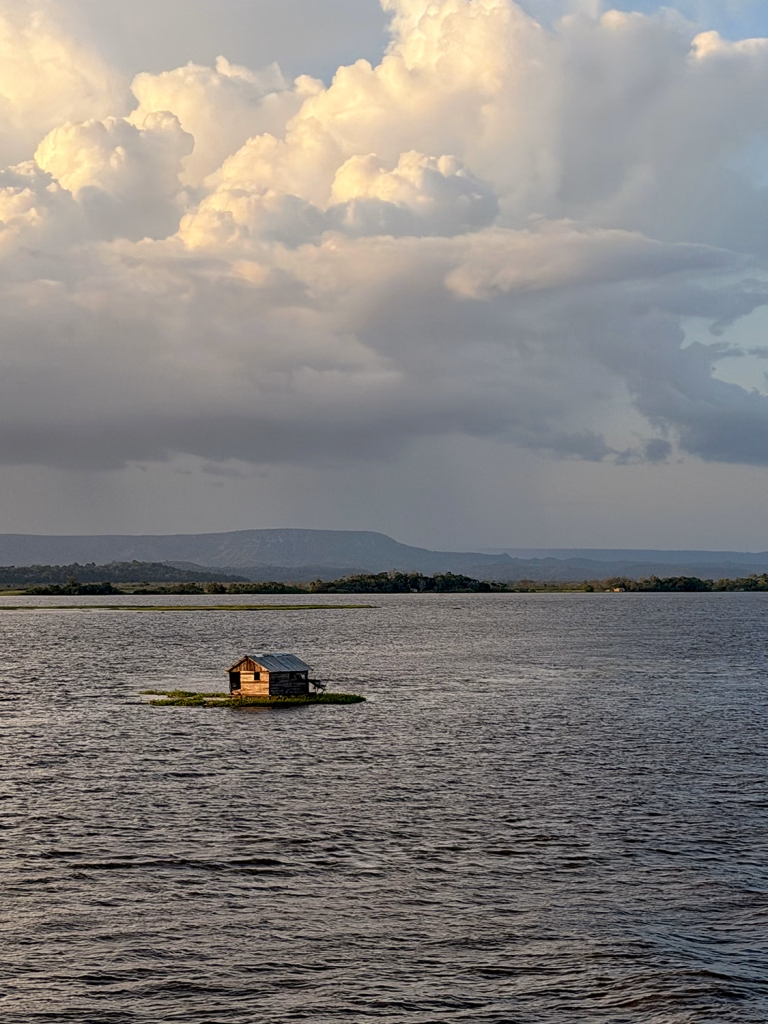
The journey itself begins to feel more like a proper Amazonian adventure at this point, with farmland giving way to wild rainforest and wide stretches of floodplains. The villages here have no connecting roads and become isolated, the river serving as their only means of transport. River dolphins begin to make an appearance here and can be seen in surprisingly large pods, especially near villages. Because we were traveling during the high-water season, our captain would often choose to travel through the smaller estuaries instead of along the main Amazon channel, bringing the forest close on both sides of the ship and allowing for a better view of the passing flora and fauna.
Children from these small villages, often called ribeirinhos or river dwellers, will sometimes come out in their motorized canoes and keep pace behind the ferry. Passengers will often seal clothes, food, or money into plastic bags and toss them to these kids in an act of charity. After observing this, I made a donation of my own but have come to regret it, learning that this practice is highly discouraged for societal and safety reasons. If you want to make a donation to these children and communities, it’s far better to coordinate through official charities such as Amazon Charitable Trust (https://www.amazoncharitabletrust.org/), Instituto Socioambiental (ISA) (https://www.socioambiental.org/en/), and others.
When we know better, we do better.
5. Santarém (3 nights)
We arrived in the Terminal Hidroviário, commonly known as Porto DER, in Santarém around 10 a.m. on the second morning. There are actually three main areas in this port where your ship may dock. On arrival, we disembarked at the main, modern pier with an excellent metal gangway that leads to an air-conditioned arrival hall. When we departed from Santarém three days later, however, we found that our next boat was leaving from the same port but on a different pier. To find that next boat, we just had to ask around until someone could point us in the right direction.
Be aware of this and, as always, arrive early.
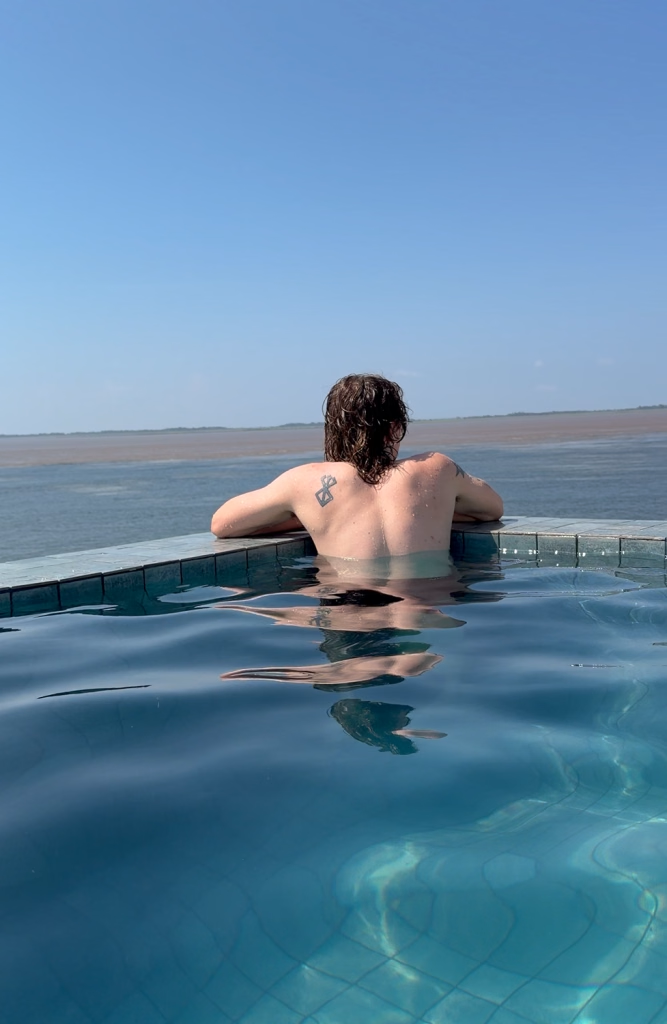
Santarém feels more like a large town than a small city. We stayed at the Hotel London Santarém (US $82 per night) and absolutely loved it. With an infinity pool overlooking the dramatic confluence of the Tapajós and Amazon rivers and within close proximity to the lively orla fluvial, or riverfront, I would go back to Santarém just to stay at this place.
Plus, we were really happy to sleep in actual beds instead of hammocks for a few nights.
In addition to the plentiful street food along the waterfront and within San Sebastian Square, Santarém also boasts several excellent, upscale restaurants and bars. We sampled plenty from both types of venues and thoroughly enjoyed the friendly atmosphere of this highly-walkable city.
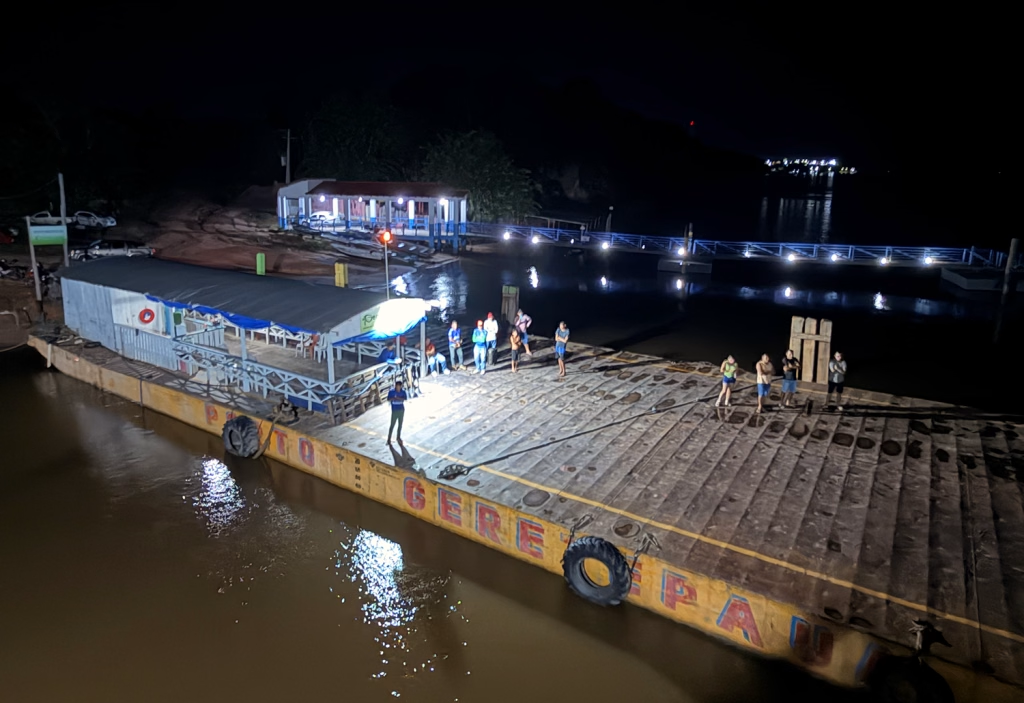
6. Santarém to Manaus Slow Boat (56 hours)
Boat Name: Itaberaba I
Price: US $335 for a double cabin (includes tickets for two passengers); available via http://www.brazilbooking.com
Departure Port Name and Location: Porto DER, Santarem (Av. Tocantins, 467 – Santíssimo, Santarém – PA, 68010-610, Brazil) (2°25’27.2″S 54°41’51.5″W)
Accommodation: Double cabin with two bunk beds, AC, and a private bathroom
Meals for purchase (US $5)
Arrival Port Name and Location: Port of Manaus (R. Taqueirinha, 25 – Centro, Manaus – AM, 69005-420, Brazil) (3°08’13.9″S 60°01’46.2″W)
Although the schedule called for this portion of the trip to take between 40 and 48 hours, it took us just over 56 hours to complete the journey, so this leg seemed particularly trying.
The reason for our delay was likely threefold. First, Manaus is situated on the Rio Negro, not the Amazon, just past the confluence of these two rivers, and the former was experiencing some severe flooding and increased current at the time. Second, we seem to have made an extra number of long stops along the route with heavier cargo like building supplies. And third, these several smaller ports seemed overly crowded with other boats, making arrival and departure precarious and quite entertaining. Now I know why every ferry contains numerous battle scars – from repeatedly knocking other boats out of the way.
The Itaberaba I was our first experience with the private cabin option for these slow boats. While it was nearly three times as expensive, we were happy to have a place to escape the heat. The air conditioning was actually so efficient that we had to use our hammocks as blankets. Our cabin included freshly-laundered fitted sheets, pillows, a private toilet, and shower. Although the water was still pumped directly out of the river, our bathroom was decidedly less bug infested than the previous two boats, and that alone was luxurious.
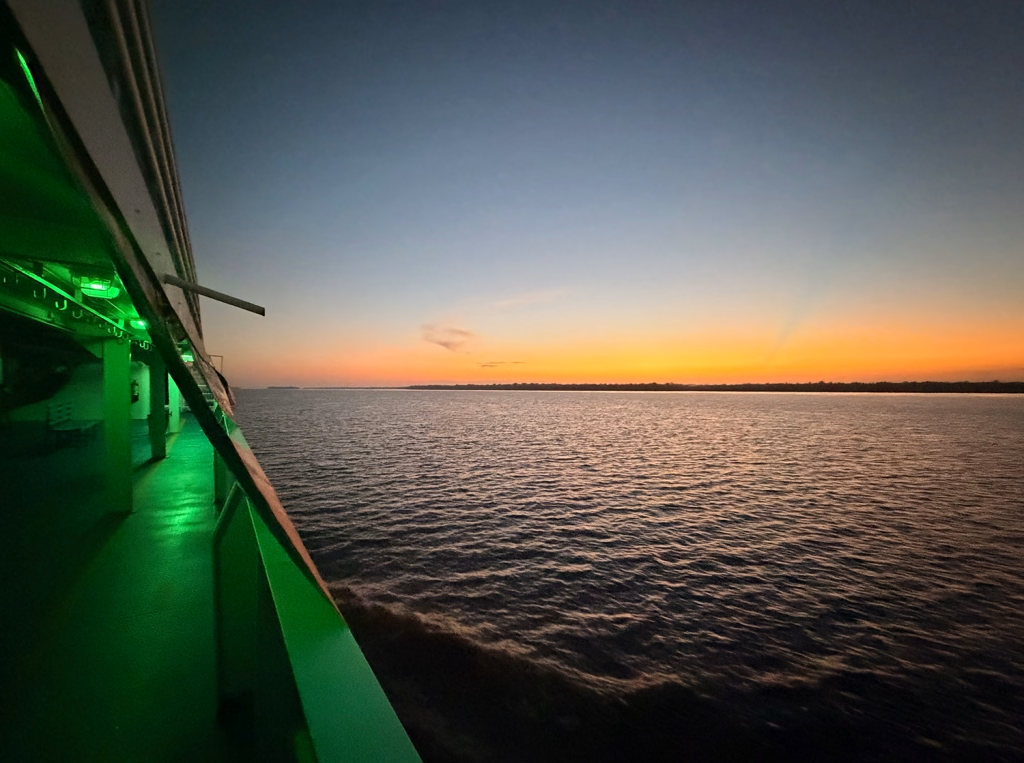
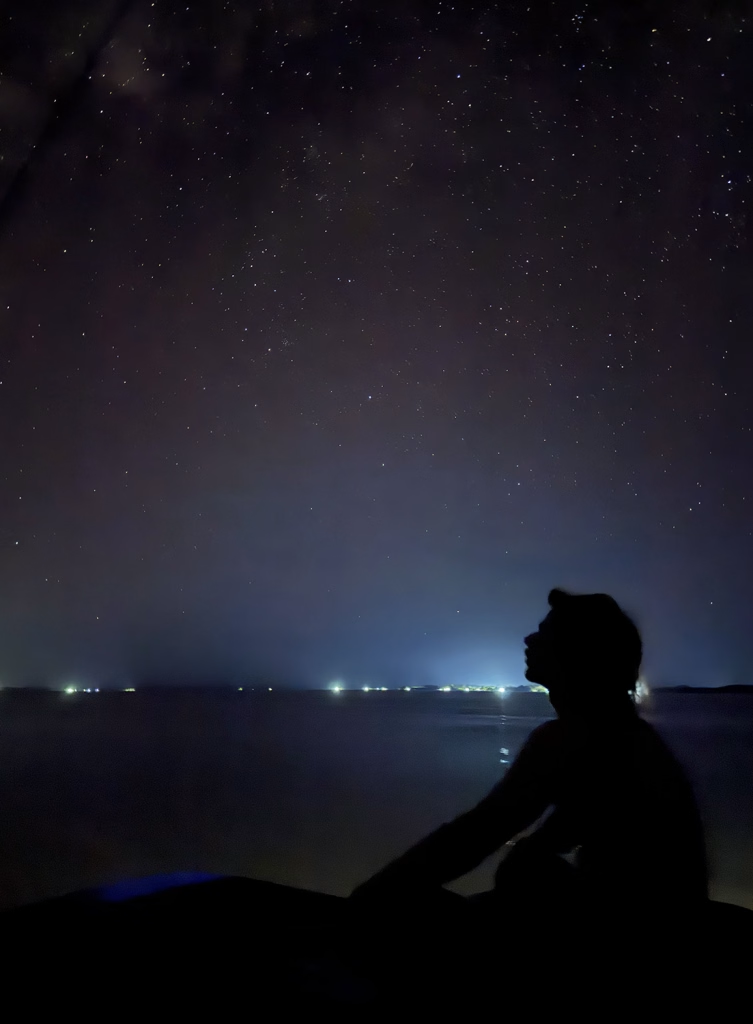
Away from the starting and ending cities, you will see very little light pollution on this leg of the journey. The Milky Way is out in full splendor, and the Amazon is an ink-black ribbon, interrupted only by the captain’s occasional search light scanning for sandbars and submerged trees. Both the sunrises and sunsets are brilliant, with orange fingers of light reaching up from below the horizon to cut through pastel blue skies. A truly transcendent experience.
Or, it may have just been the hunger making me delirious.
The meal situation on this boat was, in a word, problematic. No announcement was ever made when the cafeteria was open, and the mealtimes didn’t adhere to any strict schedule as far as we could tell. We would go down for lunch at 11 a.m., and it wouldn’t be ready. Then we would return at 11:30 a.m., and everything would be gone. A similar situation happened with dinner. We did manage to get a couple of meals, but that was only because we surveilled the area and went to the cafeteria only when we saw other passengers moving that way.
We were able to purchase inexpensive ham and cheese sandwiches at the snack shop, and they also sold an assortment of Cup Noodles that sufficed in a pinch. With cheap beer to wash it down, it felt a bit like grad school, to be honest.
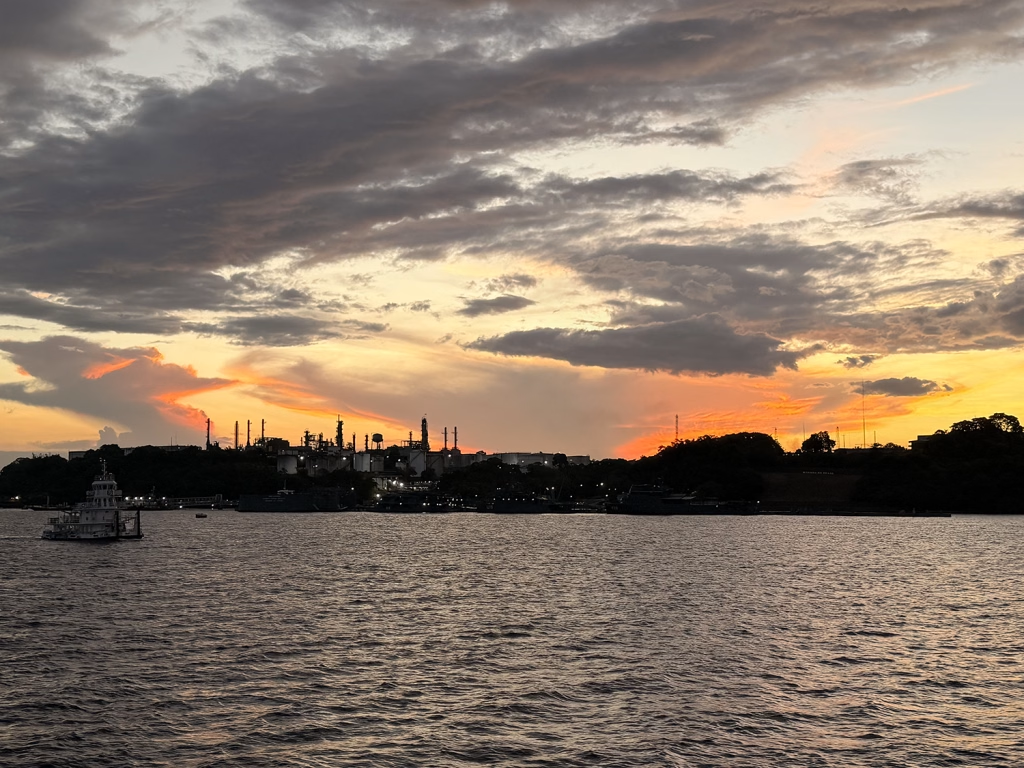
Since Manaus is the largest city in the Amazon basin, we knew we would have excellent opportunities to eat, rest, and resupply once we arrived there. Given the long delay and the missed meals, it was a great relief when we finally saw the city’s impressive harbor and skyline as the sun was going down on the third evening.
Note: It’s supposedly possible to book the Itaberaba I (and maybe other boats) for the entire trip between Belém and Manaus. We learned this from other passengers during this portion of the journey, and the internet seems to corroborate this information, saying the journey upstream takes around five days with lengthy stops in multiple cities. While that would have simplified our route planning, it would have meant that we couldn’t spend any real time in Santarém, and we would have missed Macapá completely. Still, if you’re short on time, it might be worth it to check the option out.
7. Manaus (1 night)
We were off the boat by 8 p.m. and Ubered immediately to an excellent sushi restaurant before heading to the relatively familiar comfort that is the Ibis Budget Manaus (US $70 per night).
Because we knew the most difficult portions of the river journey would begin as soon as we left Manaus, and because the city is actually connected to other destinations by road, we decided to undertake a land-based side quest here. The exact length of that extra adventure was ultimately dictated by the boat schedules, which change from week to week due to river conditions.
Since the booking process for the previous boat, Itaberaba I, was relatively easy, I decided to go through BrazilBooking.com again for this upcoming leg. Their communication was excellent, and they seemed to be able to predict the schedule better than the local agents.
All this to say that we had just under a week to complete a side quest and explore Manaus before we needed to be back at the port to continue up the river.
One comfortable night in Manaus and an excellent breakfast was all we needed before hitting the road.
8. Side Quest to Presidente Figueiredo and the Equator (5 nights)
Manaus is the last major city in the Amazon basin that connects to the wider world by road. To the north, Highway 174 stretches to the Brazilian city of Boa Vista before continuing on to the remote border with Guyana via Highway 401. This route is paved, crosses the equator, and runs through some pretty spectacular river and jungle terrain.
To the south of Manaus, Highway 319 extends 540 miles (870 km) to Porto Velho, Brazil. Poorly maintained since its construction in 1973, much of this road becomes impassable during heavy rains. And, although the rainforest along this route is purported to be some of the most pristine in all of Brazil, we worried about getting stranded due to one of the many downpours still lingering after the official rainy season.
So, we chose to go north and were very pleased with that decision.
To guard against any traction issues that might arise, we rented a Jeep Compass (US $40 per day) through Movida, one of the main car rental agencies in Brazil.
The other major rental agency, Localiza, serves as a clearinghouse for more familiar international brands such as Alamo, Enterprise, and National. It can get a bit confusing when renting a car through Booking.com or other aggregators since the given address will typically have a sign for the clearinghouse but not for the brand that you actually rented. The same goes for picking up rental cars within the airport terminals in Brazil. Just ask around to find out who rents what, and someone will inevitably point you in the right direction.
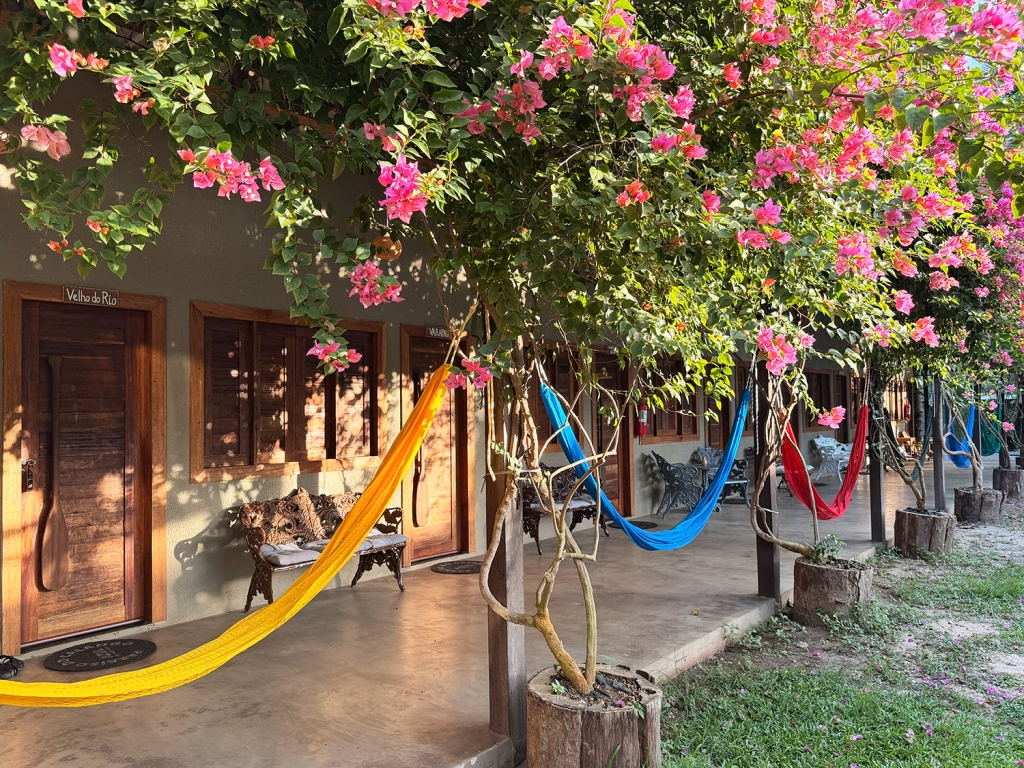
The rain started on cue as we left larger Manaus, heading toward Presidente Figueiredo. Not an actual national park, per se, Presidente Figueiredo is more of a national scenic area, with lots of waterfalls, caves, and jungle treks throughout. Fortunately, the traffic was light and the asphalt was excellent all the way to our ecolodge, Pousada Paraiso do Calango Azul (US $120 per night).
While some of the adventure areas seem to be privately owned and maintained, especially the caves, many others look to be open to the public. We went first to explore the small falls at Reserva Ecológica Cachoeira do Santuário that were fully open and busy despite signs to the contrary. Further down that same road, we thoroughly enjoyed the rapids and deep pools at Piscinas Naturais do Mutum, easily our favorite part of this little side quest. There is an entrance fee of about US $20 per car, and it was well worth it.
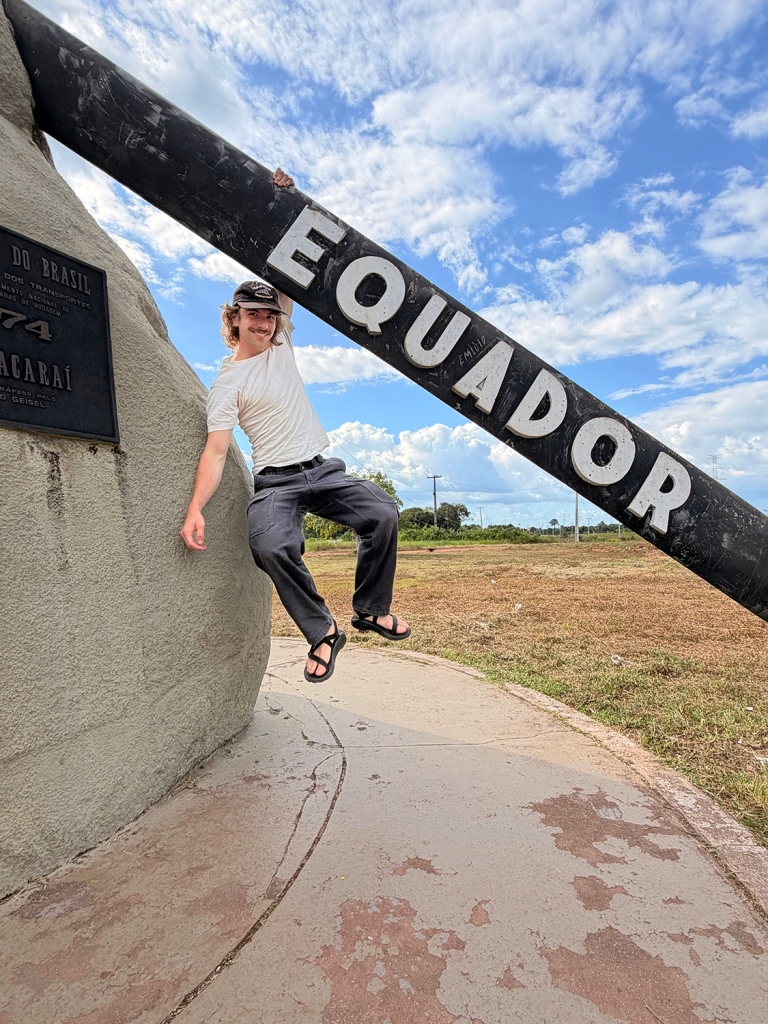
Further north along Highway 174, we arrived at the village of Equador to take the obligatory photos and videos of us crossing back and forth between hemispheres. “Village” is a misnomer for this place. It’s basically just the sign and a few houses. And the road there is poorly maintained with very few amenities along the way. In fact, we only saw two places to get gas and grab a bite of food, so fill up on both when you get the chance.
After a few nights recuperating and enjoying the ecolodge, we traveled back down to Manaus, returned the rental car, and spent our remaining time at the Novotel Manaus (US $99 per night). Mostly because they had a nice pool, and we knew we would need to be well rested for the next step.
9. Manaus to Tabatinga (Benjamin Constant) Slow Boat (7 days)
Boat Name: Voyager V
Price: US $568 for a double cabin (includes tickets for two passengers) via BrazilBooking.com
Departure Port Name and Location: Port of Manaus (R. Taqueirinha, 25 – Centro, Manaus – AM, 69005-420, Brazil) (3°08’13.9″S 60°01’46.2″W)
Accommodation: Double cabin with two beds and AC, but no private bathroom
All meals included
Arrival Port Name and Location: Porto de Benjamin Constant (aka Porto Fluvial) (R. da Bandeira, 1113 – Centro, Benjamin Constant – AM, 69630-000, Brazil) (4°22’22.1″S 70°01’39.8″W)
Note: When you book passage for this leg, you will most likely find that all information describes the route as going from Manaus to Tabatinga. While this is essentially true, the slow ferry stops just short of Tabatinga at a town called Benjamin Constant. It’s definitely possible for you to stay on the ferry and wait up to 10 hours while they unload cargo in Benjamin Constant, but the more expeditious method is to get off the Voyager V and transfer to a complementary fast boat that will get you to Tabatinga within about 45 minutes. So, when you’re booking, do ask for the boat going to Tabatinga and just get off early. I’ll repeat this information in the next section, but I’m putting it here for those who are looking to do only this portion of the trip.
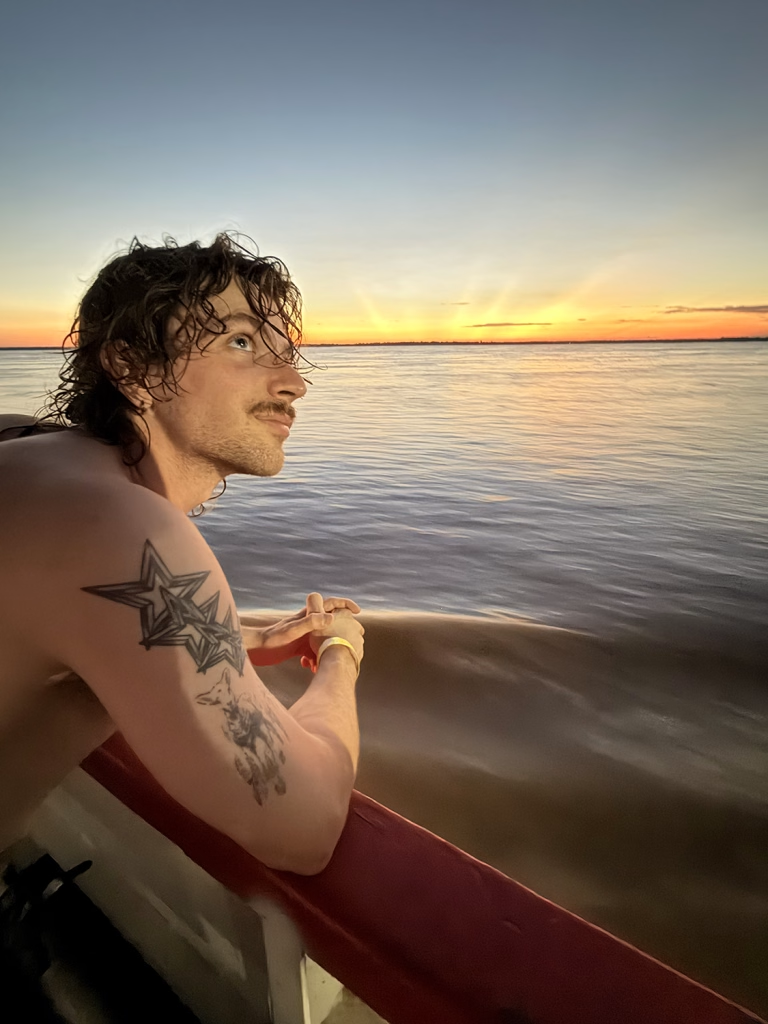
When leaving Manaus, you’ll retrace for your route for a few miles, traveling back down the Rio Negro for a bit and then turning back upstream onto the Amazon once again. Civilization begins to disappear along this portion in ernest. The forest is taller, the riverbanks are closer, and the nights are pitch black. You will start to see more rapids and debris in the river. Villages begin to show more thatched roofs and very few power lines. Whole trees, their roots or branches jammed deep into the muddy river bottom, will bob to the surface and back down again as the deceptively strong current bends them like twigs.
From this point, there are no alternate routes on the ground. It’s either fully forward and up the river or turn back and abandon the adventure completely. While it’s technically possible to catch a flight out of Leticia or Iquitos if an emergency arises, the river is now the only real transport.
The Voyager V is a different sort of boat than our first three slow ferries. First of all, there seem to be more deckhands than passengers on this boat. A fully-equipped metal shop is located at the stern, with workers welding and cutting various items throughout the journey. Second, this boat is also a bit smaller with only three decks. The cargo deck is on the bottom, of course, and the hammock hall is on the top. The middle deck includes around eight cabins, the snack bar, and, weirdly enough, an “indoor” soccer pitch. It’s actually just an open-air cargo space that has been enclosed by a huge net. But workers and passengers alike play pickup matches almost every evening. And it gets quite competitive, with keepers making daring saves while diving right across the scalding metal floor.
They also have a snooker table in the snack bar area. Ben and I played several games with the workers and other passengers, although we never really figured out the Brazilian river rules as they didn’t fully match up with the traditional rules of snooker. It was fun to watch, however, as the boat would suddenly lurch and players would pick up a corner of the table to try and keep the balls in place.
Our cabin on the Voyager V was more modest than on the Itaberaba I. While we did, thankfully, have a refrigerator to keep our packages of salami cold, there was no private bathroom. And the cabin hadn’t been cleaned in weeks, although the bed linens did seem to be freshly washed. We borrowed a broom to sweep up the garbage left by previous passengers, and we tried to sweep up the ant colonies, but they were just a fact of life on this boat.
There are supposed to be four bathrooms on this deck, but two of the doors had locks on them. The bathrooms available to us were quite rough. Located on either side of the snack bar, they never had any toilet paper, and the plumbing to both the sink and the toilet was constantly coming loose and flooding the floor with every wash or flush. I quickly developed the habit of checking and repairing the plumbing before I used the facilities.
The worst part about the bathrooms, however, was that the lights stayed on all the time, and the insects along this portion of the river found those lights irresistible. In particular, a species of small green cricket would swarm the bathrooms every night. Thousands of them. No joke. I started turning on the shower every time I entered, just to wash the live bugs and the thick layer of slick green pulp down the drain.
This was the longest, slowest leg of the entire trip. Originally scheduled for five days, our journey took just over seven. And the delay grew increasingly agonizing the closer we got to Tabatinga. We knew there would be long stops along the way in places like Jutaí, Tonantins, and Amaturá, but we weren’t expecting to stop for hours in tiny villages like Belém do Solimões to offload cargo. We had settled into a kind of patient apprehension by this point. Anxious to get moving and get off the ship, but knowing there was nothing we could do about it.
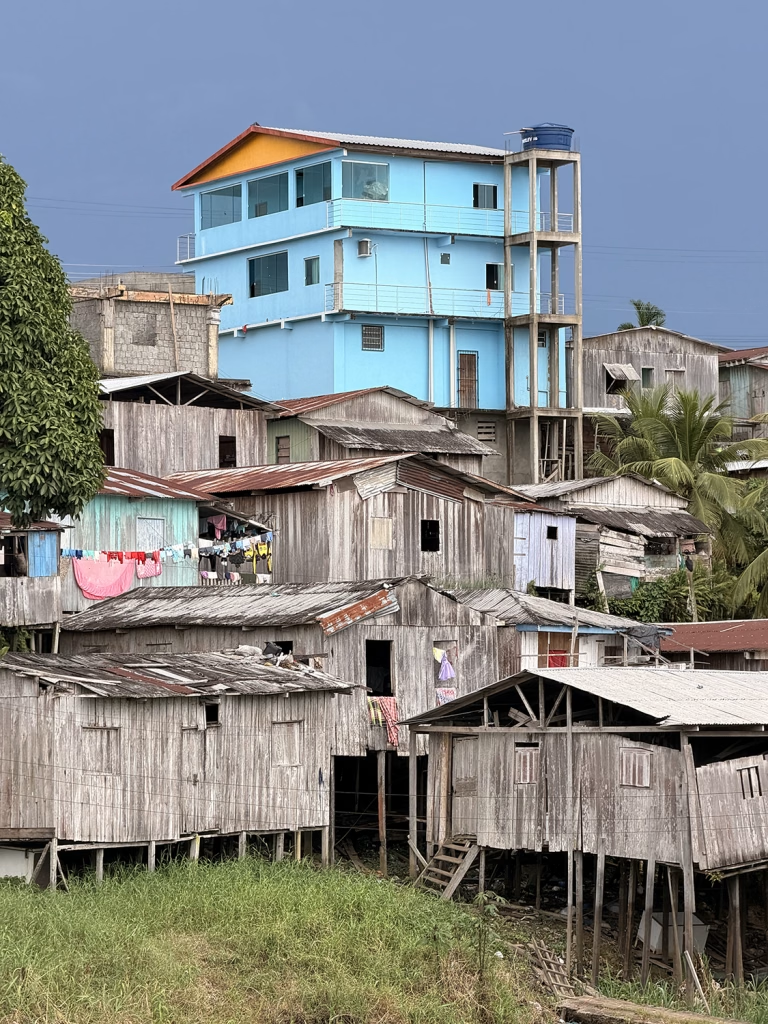
In the early afternoon of the seventh day, we finally arrived at Benjamin Constant.
10. Benjamin Constant to Tabatinga (About 45 minutes via fast boat)
Benjamin Constant is the last stop on this very long journey to the Tabatinga/Leticia/Santa Rosa triborder. While your ticket on the Voyager V allows you to continue on that same ship to Tabatinga, there is a courtesy fast boat that will take you on that last leg in a fraction of the time. If you don’t take the fast boat, you will have to wait until the cargo is unloaded to continue on, and that can take 10 hours or more.
We were handed a voucher as we exited the slow ferry and simply gave it back to the fast boat captain once we transferred our luggage and climbed inside. Locals in Benjamin Constant also use this fast boat to travel between the two towns. You’ll see them paying in cash. Because of this, the fast boat can fill up quickly. So you’ll need to get off the cargo boat as soon as possible to secure your spot.
This was our introduction to the fast boats to come. Luggage was strapped to the top of the boat and covered with a tarp. Seating was in a 2×2 configuration with a narrow aisle running down the middle. While the windows on the side can be opened for a bit of relief, the cabin is hot, damp, and very loud due to engine noise. The trip takes about 45 minutes, and the boat will likely be completely full. You’ll arrive at the Terminal Hidroviário de Tabatinga along the northern shore of the town.
11. Tabatinga/Leticia/Santa Rosa Triborder (4 nights)
This is a very porous triborder between Tabatinga (Brazil), Leticia (Colombia), and Santa Rosa (Peru), and it’s very easy to move between all three without the need to deal with any kind of immigration. You’ll see signs indicating that you’re crossing the border between Tabatinga and Leticia, and those streets do have an increased police presence, but no one checks your documents on either side.
It is possible, in fact, to stay in Leticia the entire time without having officially exited Brazil. Or to stamp out of Brazil and into Colombia on different days. But you will definitely need all exit and entry stamps before you finally cross over to the river island where Santa Rosa is located and continue the journey upriver.
Immigration in Tabatinga is handled by the Federal Police at Avenida da Amizade, 26 (4°14’11.6″S 69°56’14.6″W). Ask any tuk-tuk driver, and they will know precisely where to take you. Do be aware that the office closes for a couple of hours every day for lunch. Otherwise, they are open from 8 a.m. to 6 p.m. every day.
In Leticia, Colombia, you will have to go to the airport to get both your entry and exit stamps. Although there is supposedly another location, everyone advised us that it was the airport or nothing. Again, every tuk-tuk driver knows exactly where to take you.
Before you leave Leticia to cross over to Santa Rosa, Peru, you will have to return to the airport to get stamped out of Colombia. Because the airport immigration office opens at 8 a.m., you might need to stamp out a day early if you’re going to catch an early boat heading up the river to Iquitos. Officials are fully aware of this timing issue, so you shouldn’t have a problem doing this.
Tabatinga and Leticia are excellent cities for a few days of recuperation after the long river journey. With plenty of good food options and lively community and art scenes, we enjoyed spending four nights staying at the Hotel Anaconda (US $64 per night) in Leticia. Both cities have a reputation for being a bit edgy, and Tabatinga does give off that feeling a bit, but we found everyone to be very friendly, with lots of kids and families walking around the city at night. There was even a community dance practice that occurred every evening in the park across from our hotel with dozens of people in attendance.

12. Leticia to Santa Rosa (15 minutes via local water taxi)
We were at the Leticia airport when the immigration office opened at 8 a.m., then a quick tuk-tuk ride back to the hotel to collect our bags. The local water taxis to Santa Rosa leave from the Puerto Fluvial de Leticia Amazonas (4°12’58.5″S 69°56’42.1″W), just a short walk from where we were staying.
Along the road leading down to the docks, you’ll find plenty of stores selling snacks and other travel supplies if you still need to stock up. Although there are some opportunities to do this in Santa Rosa, you’ll find a better selection here. Plenty of water taxi captains will approach you as you near the docks, so you can negotiate a price for the 15 minute crossing, but it’s typically around US $3 per person.
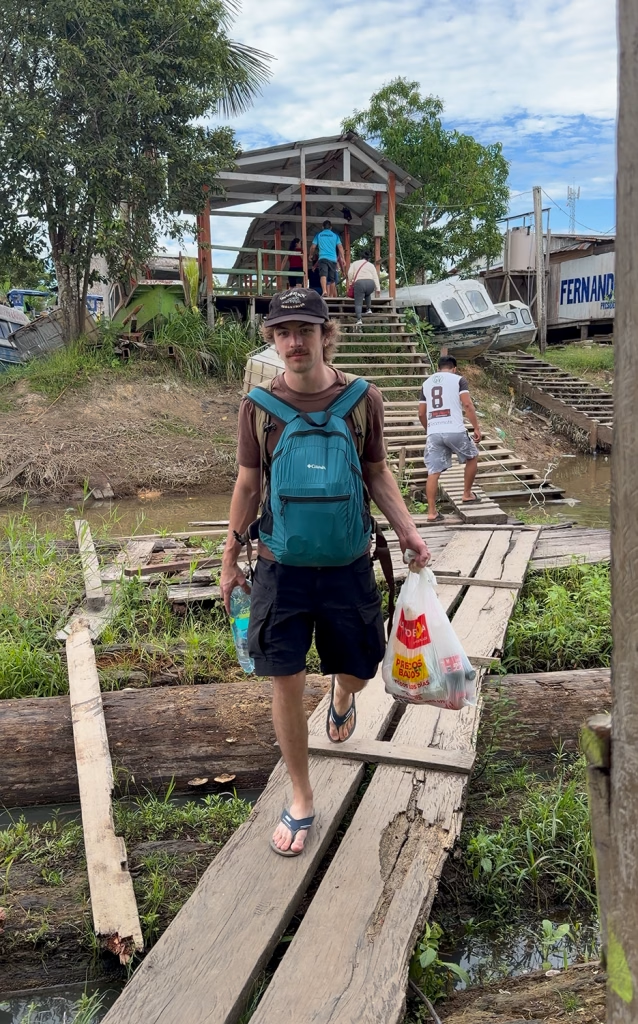
From this point on, many docks are little more than loose wooden planks running across a muddy shore. There are exceptions to this rule in Iquitos and Coca, but note that accessibility can certainly become an issue here.
The water taxi will arrive at or very close to the Embarcadero Fluvial Santa Rosa Peru (4°13’28.6″S 69°57’13.2″W), which is also the location from which the larger fast boats typically depart.
You will need to make a quick run to the immigration office to stamp into Peru. The office is located at Migraciones Perú (4°13’19.4″S 69°57’35.5″W) just on the other side of the small town. It’s a short walk if you have time and not much luggage, or you can take a five-minute tuk-tuk ride for about US $5 if you’re in a hurry. Again, every tuk-tuk driver knows precisely where to take you, and they will typically wait to bring you back if it’s not too busy.
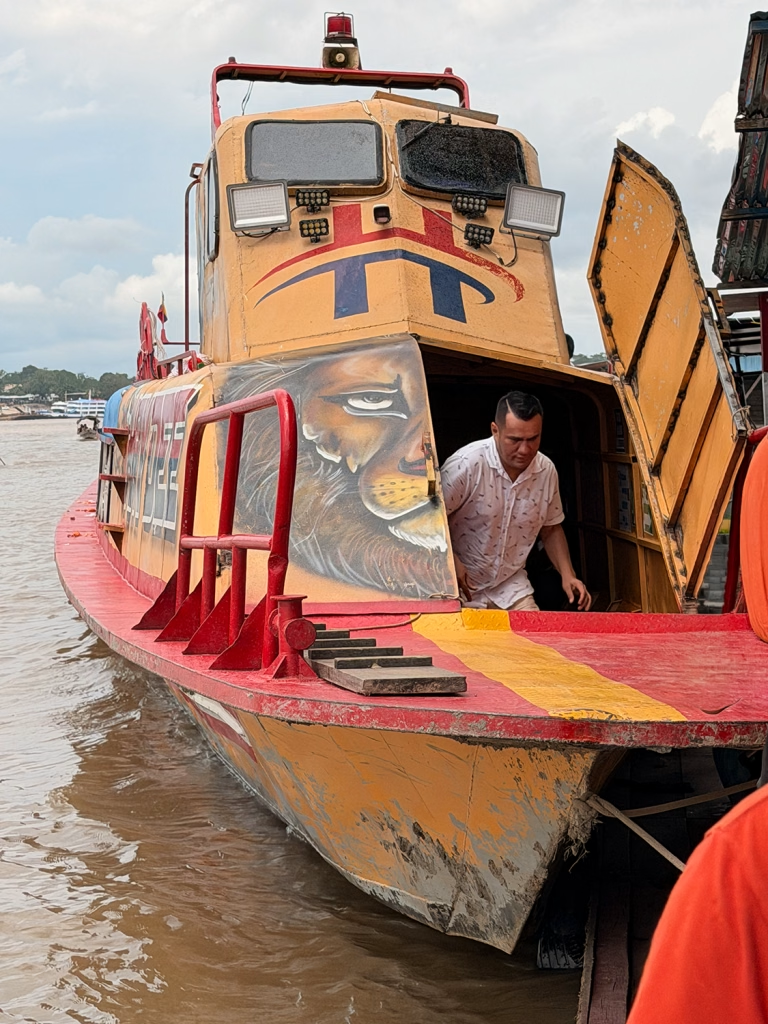
13. Santa Rosa to Iquitos Fast Boat (19 hours)
Boat Name: HAYDEE
Price: US $35 per person
Departure Port Name and Location: Embarcadero Fluvial Santa Rosa Peru (Q2FW+XG2, Santa Rosa de Yavarí 16250, Peru) (4°13’28.6″S 69°57’13.2″W)
Accommodation: Two reserved seats and AC, but they don’t always have it turned on. One toilet.
No meals offered
Arrival Port Name and Location: Puerto LAO (Av. La Marina 398, Iquitos 16002, Peru) (3°44’25.7″S 73°14’25.6″W)
Getting tickets for this fast boat was a bit difficult. Although some ticket vendors are supposedly operating out of Leticia, everyone told us we had to book them in Tabatinga. Most vendors are located on or near Rua Marechal Mallet, and their signage isn’t very obvious. Some are working from a desk in a restaurant. Others are behind bars and mirrored glass, so you can’t tell if anyone’s inside. As it turns out, a random tuk-tuk driver knew more about the offices than anyone else, and he was very patient as we stopped at several locations.
We tried to book passage on the Consorcio fast boat (+51 961 745 188) as this is supposed to be the most comfortable boat making the journey, but they aren’t great about answering WhatsApp, and that’s really the only way to contact them. Also, their office has recently moved, with the location on Google Maps now occupied by an empty lot. By the time we spoke to an actual person, they had no availability until the following week. So, we went back to a previous agent and settled for passage on the HAYDEE.
This is where we said goodbye to our trusty camp chairs and cooler, thinking there wouldn’t be room to take them on the fast boat. As it turns out, however, they would have happily stored those items for the journey as we saw many people transporting supplies and other bulky items. There was even a lady who had a basket of live chickens.
As I mentioned near the beginning of this trip report, the boats get progressively worse the further upstream you go. In keeping with this sentiment, we felt like we had found the transportation low bar with the HAYDEE. We were wrong of course, but this was still set to be a rough 18 hours. We boarded in Santa Rosa at noon and climbed off the boat in Iquitos at 6:45 a.m. the next day.
The boat is long and narrow, arranged in a 2×2 seating configuration with a very narrow aisle running down the middle. The overhead space is short but deep, so our small backpacks and snack supplies fit up there just fine. The seats are cloth and they do recline, so that made it possible to sleep, if fitfully.
The HAYDEE was also oversold. Although we had reserved seats with our tickets, there were several jump seats in the bow that quickly filled up with overflow passengers. And the queue to board was a bit of a free-for-all.
Despite being a fast boat, this is not an express. We made several stops throughout the journey to allow passengers on and off, and we even stopped at the village of Caballococha for a political rally. The bad thing about the stops is that they delay the journey. The good thing is that locals will come aboard to offer snacks and, most importantly, bottled water. Although the boat is advertised as having air conditioning, the crew didn’t turn it on until the sun had gone down. And, even then, the units can’t keep up with the heat. So most passengers just opened the windows back up to get a bit of a breeze.
There is a toilet in the back of the boat and a small sink, but there isn’t any toilet paper or soap, so definitely bring your own.
If I could have made one change to this entire trip, it would have been to book a better boat for this portion in advance. The Consorcio would have been ideal, but the Fluvial Zoe Alexa would have at least been a step up from our experience.
Note that when you arrive at Puerto LAO in Iquitos, the disembarkation includes not only a walk across the aforementioned loose boards over mud, but also a pretty serious climb up several sets of steep stairs. Again, persons with mobility issues will have difficulty here.
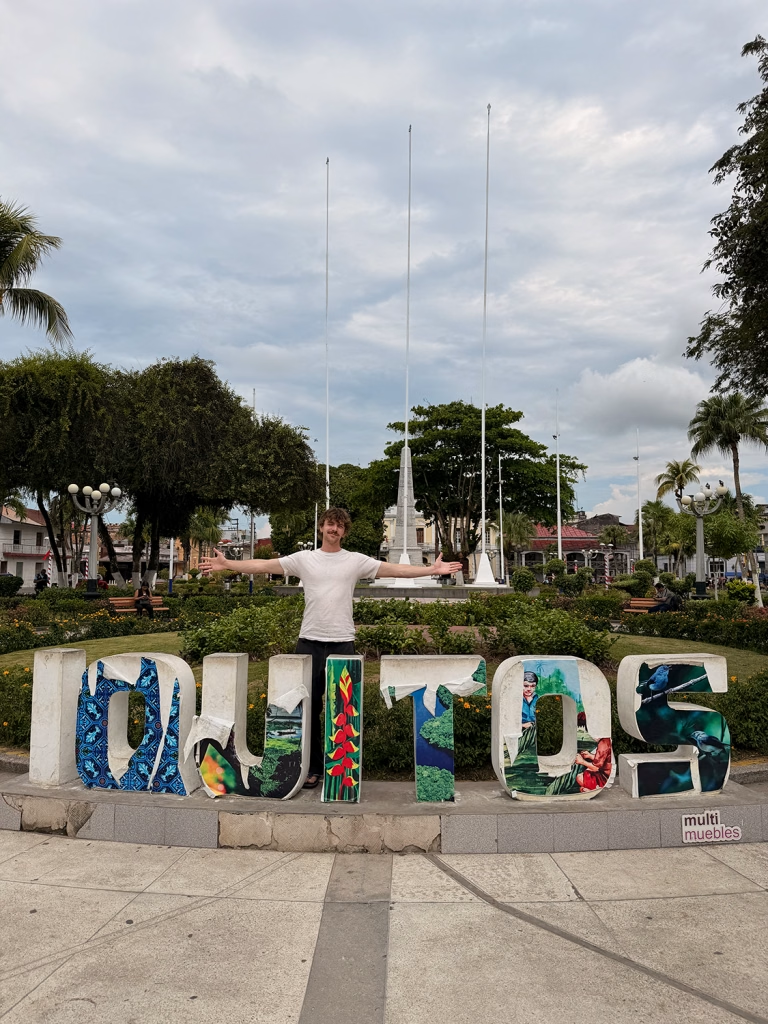
14. Iquitos (6 nights)
Iquitos is the largest city in the world that cannot be reached by road. At just under half a million people, it’s a fun, vibrant place with plenty of art, food, and adventure to keep you occupied for weeks. Several people during the previous segments of this trip insisted that we stay in Iquitos as long as time would allow. Unfortunately, we had just under a week to explore.
We stayed at the Hotel Marañón (US $67 per night) in the heart of downtown and close to our pick of excellent bars and restaurants. It was easy to walk everywhere but there were also plenty of tuk-tuks to get us to the other side of the city in the heat of the day or late at night. The quirky Margaritaville restaurant is not to be missed with its collection of American college football memorabilia and stiff drinks, and the Mercado Belén is something special with its variety of Amazonian fish, fruits, and handicrafts.
We were exhausted by the time we arrived here and were happy to take the week to relax and feel human again.
I will share that Iquitos is also a bit touristy. This was the first place since Belém that we heard English being spoken in the streets, and we saw lots of groups who had flown to Iquitos for a taste of the deep Amazon. Many agencies advertised day trips along the river and treks into the jungle. While we applauded their sense of adventure, Ben and I talked about how Iquitos – and the Amazon itself – hits differently when you’ve already spent over a month on the river.
I would love to return to Iquitos someday, but I would definitely arrive by plane that next time just to make the comparison.
Note: if you don’t already have plenty of Peruvian soles, Iquitos is the place to get cash at an ATM or exchange money. You won’t find another ATM until you get to Coca, Ecuador, and credit cards simply do not work from this point on. We ran out of cash midway through the next few legs, and it was a massive headache. Whatever you think you’ll need, double it.
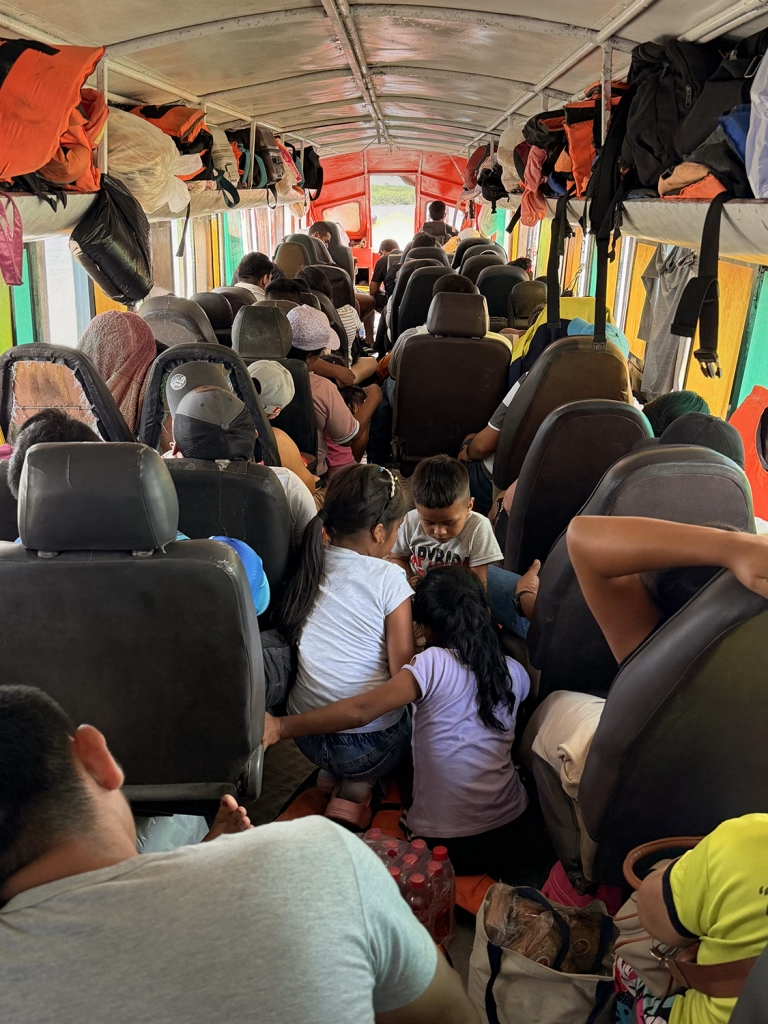
15. Iquitos to Cabo Pantoja Fast Boat with overnight in Santa Clotilde (total of 36 hours)
Boat Name: Trans Vichu
Price: US $41 per person
Departure Port Name and Location: Puerto LAO (Av. La Marina 398, Iquitos 16002, Peru) (3°44’25.7″S 73°14’25.6″W)
Accommodation: No assigned seats, first come first served. No AC. One toilet.
Meals: It depends
Arrival Port and Location: N/A Cabo Pantoja (0°58’17.1″S 75°10’27.6″W)
In the immortal words of Deadpool, “Rock, meet bottom.”
This was doubtless the most difficult leg of the entire trip. Interesting and authentic for sure, but certainly not something for the uninitiated. We only thought traveling on the HAYDEE was a miserable experience; it was a luxury liner compared to the Trans Vichu.
Like the HAYDEE, this boat is also arranged in 2×2 seating with an aisle down the center, but the Trans Vichu is narrower. So narrow, in fact, that the first few rows are single seats on either side. The roof is low, the storage is sparse, and there is no air conditioning at all. Thankfully, the windows do open, and the crew often leaves the front hatch open so a breeze occasionally makes its way down the center of the boat.
The seats are made of fake leather, they don’t recline, and they are falling apart. Everything is rusty metal and wet plastic.
Our luggage was stored on the back of the boat near the engines. Due to the occasional rain showers and because this boat sits low to the water, our bags were soaked by the end of the trip.
This portion is essentially five legs that are all booked under one ticket when you reserve the Trans Vichu. Kind of. I’ll break each of those legs down into the five sub-sections below.

15a. Iquitos to Indiana Fast Water Taxi (45 minutes)
The embarkation port will most likely be at or near the place you arrived, Puerto LAO, with its steep, loose stairs. This boat left very early in the morning, so the sun had not yet come up, and we were climbing down in the dark. At the dock itself, there were no large boats, even by fast-ferry standards, and the crowd of early travelers was swelling by the minute. There was no way this many people were going to fit on any one of those boats. I was definitely beginning to worry about a very long, overcrowded trip.
As it turned out, however, these were just the water taxis that would take us to the tiny town of Indiana. The crew would fill up one taxi with passengers, then open and begin to fill another. After about an hour of waiting, our little boat convoy began leaving in turn toward Indiana, arriving within 45 minutes.

15b. Indiana to Mazán (30 minutes via tuk-tuk)
We got off the boat in Indiana and bid our final farewell to the Amazon River. Indiana sits on the southern side of a massive bend in the Napo River. So, instead of taking extra hours to navigate that bend, everyone disembarks and climbs up the embankment to hire a waiting tuk-tuk that will cut across the meander neck and take you to Mazán.
Note that the tuk-tuk isn’t included in the price of your boat ticket, and you’ll need cash. It only costs 3 to 5 Peruvian soles (US $1 to $1.50) per person, but it’s a terribly long walk otherwise, and you’ll likely miss the boat.
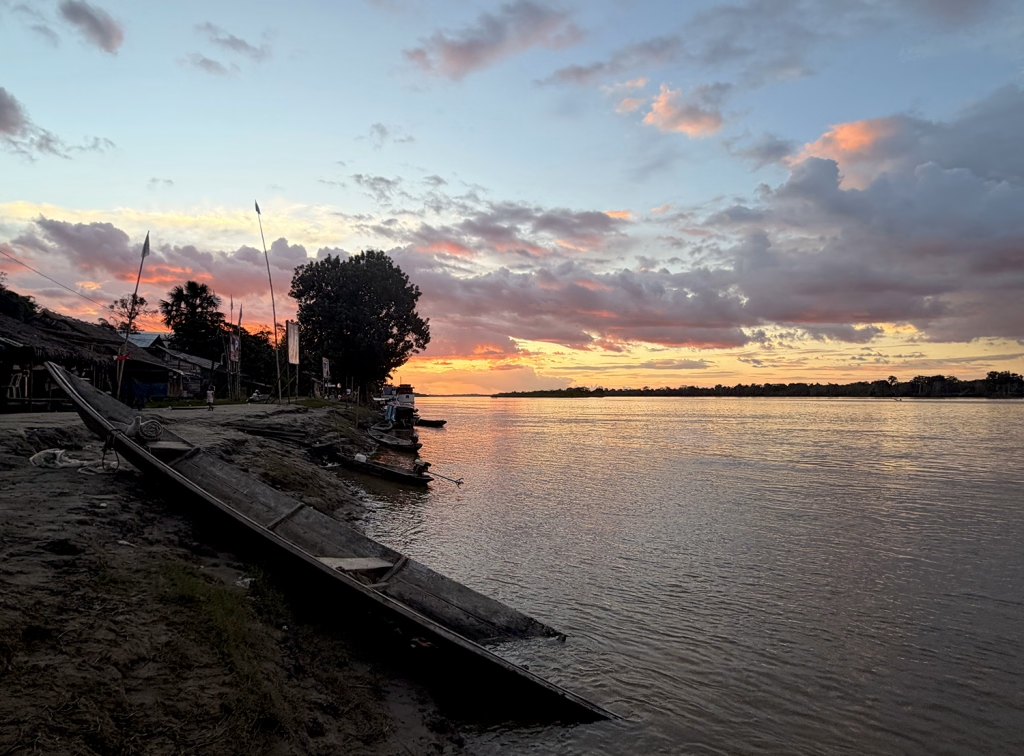
15c. Mazán to Santa Clotilde Fast Boat (8 hours)
The tuk-tuk will bring you right to the dock where the larger fast ferries are waiting (3°29’43.1″S 73°05’26.0″W). There may be more than one boat with the name Trans Vichu on it, but you’ll see which one is being loaded when you arrive. If you’re unsure, just show your ticket to any crew member, and they will get you sorted.
You will also see several vendors at the port selling snacks, water, and travel supplies. This is about to be a very long, uncomfortable ride. If you need anything, now is the time to get it.
We were on the boat by 8 a.m. and heading up the Rio Napo.
Now, this is where the trip depends on the whim of the boat captain. If the captain feels up to it, the Trans Vichu will travel throughout the night, cutting the travel time essentially in half and arriving at Cabo Pantoja sometime the next morning (about 20 hours). If not, the boat will likely stop in the village of Santa Clotilde for the night, making the total travel time just over 36 hours. As it turns out, our captain decided to stop.

15d. Santa Clotilde (12 hours overnight)
When we pulled up to the bank in Santa Clotilde at 4 p.m., every passenger except the two of us seemed to know that we would be staying for the night since they began disembarking and taking all of their belongings with them. We followed suit.
A short walk up the riverbank brought us to a guest house where several people from the boat were making arrangements for the night. I don’t remember the name of the place (or if it actually had a name), but these are the coordinates: 2°29’17.6″S 73°40’35.8″W. There is also a volleyball court set up right in the front yard, so you can’t miss it. At only US $6 per room, Ben decided to get his own so we didn’t have to share a bed.
Further into the town, there may be other rooms to rent for the night, but, after learning that we would have a 4 a.m. departure, we wanted to stay close to the shore. Our guesthouse met the minimum requirements to be such: a small bed, a door that closed, and a bathroom with toilet, sink, and shower. The rooms also have wall-mounted fans, but Santa Clotilde only has electricity from 6 p.m. to midnight, so it was a muggy, sweaty night.
There are small home kitchens scattered about Santa Clotilde that serve as restaurants, and a few small stores sell snacks and beers.
Ben and I watched several vigorous games of volleyball, enjoyed the lightning and cooling rain of our first serious Amazonian storm, and turned in early to be ready for the early departure on the next day.
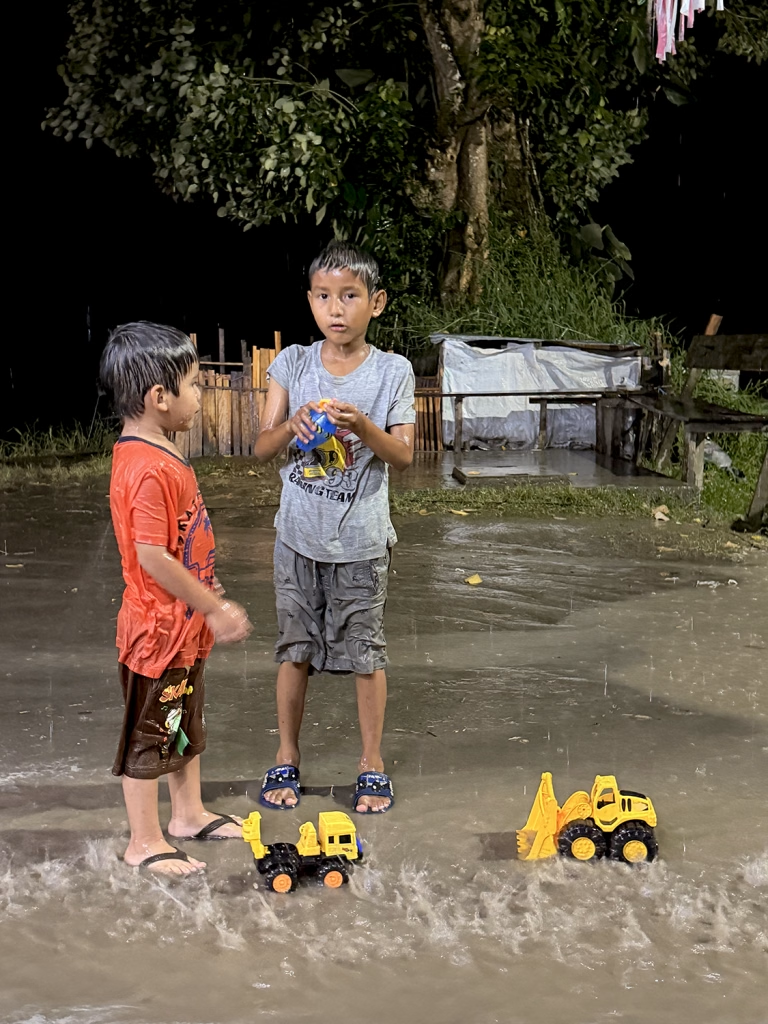
15e. Santa Clotilde to Cabo Pantoja
We were back on the boat at 3:30 a.m. and underway by 4:02 a.m. The crew did not do any kind of head count or look at tickets, which meant that, if you weren’t on board when they departed, you would be stuck in Santa Clotilde until the next boat arrived.
Thankfully, the boat was cool and quiet for the first several hours, and everyone slept as best as they could.
At 11:15 a.m. we stopped for lunch at Camp Serio (1°47’09.4″S 74°42’40.8″W). The place name shows up on Google Maps, but that’s about it. Again, we followed the example of other passengers who disembarked en masse, this time leaving their luggage behind.
A muddy riverbank climbed up to the edge of the jungle, and a narrow path led into the deep green shadows. Butterflies were everywhere, and pigs — domesticated or wild, we didn’t know — rooted in the underbrush close by.
After a few hundred meters, the jungle path opened up to a huddle of thatched houses along a narrow tributary. Ducks, chickens, and cats wandered through the postpiles holding the huts aloft, and our fellow passengers were already sitting down to lunch. It was a surprisingly beautiful, almost idyllic setting, and our time there was way too short. Everyone was back on the Trans Vichu within the hour, and we started back up the river.
We finally arrived in Cabo Pantoja at 5:55 p.m. and rushed off the boat to try and catch the immigration office before they officially closed at 6 p.m.. The office is a bit of an uphill hike from the dock and not easily found on Google Maps (Puesto de Control Fronterizo – Cabo Pantoja (Migraciones) (0°58’11.3″S 75°10’30.4″W). We had to carry our bags with us, so we arrived just a few minutes after the doors were locked. The very helpful local police officials sitting at the office next door just told us to keep knocking. And, when we did, the immigration officer opened back up for us and stamped us out. No problem.

16. Cabo Pantoja (1 night)
Despite our having succeeded with immigration, we arrived back at the docks too late to catch the water taxi going on to the Ecuadorian border at Nuevo Rockafuerte. It had been our plan to make it all the way to Ecuador this evening where we already had accommodation waiting for us.
However, at the dock in Cabo Pantoja, the boat taxi driver said it would be too dark to navigate the river safely tonight and told us to meet him again at 6 a.m., and we were stuck here for the evening. This was definitely a case of me being overly confident in the schedule I had set. If you’re coming upriver on the fast boat from Iquitos, fully expect to stay in Cabo Pantoja for a night before continuing on. The number and length of stops is just too unpredictable to plan around.
We looked for accommodation and food in a place with very little of either. Basically, we just had to ask around to find a couple of empty beds and an open kitchen. The available food was standard but quite good. Chicken and rice with beans, but they did have a bottle of hot sauce that was unusual and welcome. The beds were rough with no pillows or sheets. Just a couple of dirty mattresses off the floor to keep most of the roaches and spiders at bay. We did ask for and received a floor fan that helped with the heat until the power, on schedule, cut out at midnight.
17. Cabo Pantoja to Nuevo Rocafuerte Motorized Canoe (2.5 hours)
Boat Name: N/A
Price: US $20 per person
Departure Port Name and Location: N/A Cabo Pantoja (0°58’17.1″S 75°10’27.6″W)
Accommodation: It’s a canoe, so there might be one or two small seats, or you sit on the floor.
No meals, obviously.
Arrival Port and Location: N/A Nuevo Rockafuerte (0°55’09.7″S 75°24’02.7″W)
We were up again at 5 a.m. and waiting at the docks where we last saw our taxi driver. Six o’clock came and went with no sign of him.
Another passenger hoping to catch a ride to Nuevo Rocafuerte introduced himself to us as Carlos. We would very likely be sharing the taxi to Ecuador. As it turns out, he was from Cuba and making his way back home. He spoke fluent Spanish, of course, and his English was quite good. Nice to have a translator with us, if only for a little while.
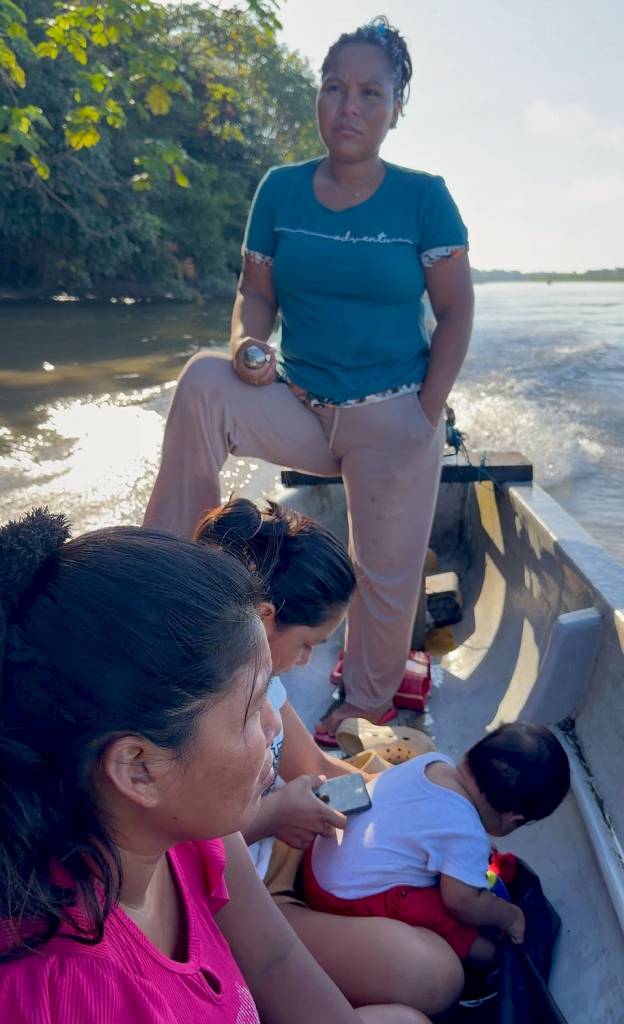
At 7 a.m. a woman nursing an infant walked down to us and asked if we were waiting for the taxi. We told her that we were, and she seemed to get quite upset. She walked back into her home where we heard her yelling at someone inside. After a few minutes, she returned to us still carrying the baby. She announced that her husband had gotten too drunk last night and wouldn’t be taking us this morning, but that she would.
She showed us to her boat and, while we were situating our bags and ourselves, two other women showed up and climbed into the boat with us.
I say “boat”, but this was actually just a motorized canoe with only one small bench seat. Loaded down with six adults, a baby, and our bags, we sat very low in the water and eased our way into the current for what would become a two-and-a-half-hour journey.
Most information on the internet clocks this portion of the trip at 45 minutes, max. But those sources must be talking about going downstream. The current was very swift here, with lots of hidden sandbars and logs lurking just below the surface. We even saw some white water in the rockier parts of the river. Our boat ran aground three times, and Ben and I even had to jump out to help dislodge the boat at one point. The sun is relentless, and you will need a hat and sunscreen at the very least. And, of course, bring water and snacks.
The trip cost us US $20 each. Well worth the cost to experience traveling like one of the ribereños, if only for a short while.
Upon arrival in Nuevo Rocafuerte, the canoe passed a larger metal pier and continued on toward the center of town, stopping around (0°55’09.7″S 75°24’02.7″W). This is the area of town where you will find a few places to eat and stay for the night.

18. Nuevo Rocafuerte (1 night)
There is one hotel in Nuevo Rocafuerte that you can actually book online, the Hostal Yurag Wasi (US $47 per night), but there are a few other comparable places you can book when you arrive. All of these accommodations are part of a convenience store or a restaurant. Just ask around, and you’ll find something.
For our experience, Hostal Yurag Wasi was a gem. It’s certainly basic, but the room had clean sheets and air conditioning. And the woman running the place was very patient with us as we sorted out our dwindling cash supply. She even exchanged our Colombian pesos at market rate to help us pay for the room.
It is at these stores/hostels that you are also able to buy tickets for the next boat up the river. Online information said we could buy tickets at the port office, but it wasn’t open on the day we arrived. At Hostal Yurag Wasi, the owner called and made a reservation on the next boat for us, and we just paid her directly. That satisfied our travel needs but left us with no cash for dinner. So, we settled for a handful of peanuts and began rationing what little we had left.
Now, the only task remaining was to find the Ecuador immigration office and stamp into the country. But that proved to be the beginning of a very persistent problem.
If you ask AI, “Where is the immigration office in Nuevo Rocafuerte, Ecuador?” it will inform you that the office doesn’t exist, that it closed permanently in 2019. Not trusting the robots with something so important, Ben and I asked everyone around town. Our nice hostel lady, the local police officers, even the soldiers stationed at the frontier told us the same thing: we would have to go on up the river to Coca before we would find an immigration office and officially stamp in.
When absolutely everyone agrees with the robots, trust begins to sneak in. So, we would continue on the next day and not worry about it until we arrived in Coca. This saga is to be continued …
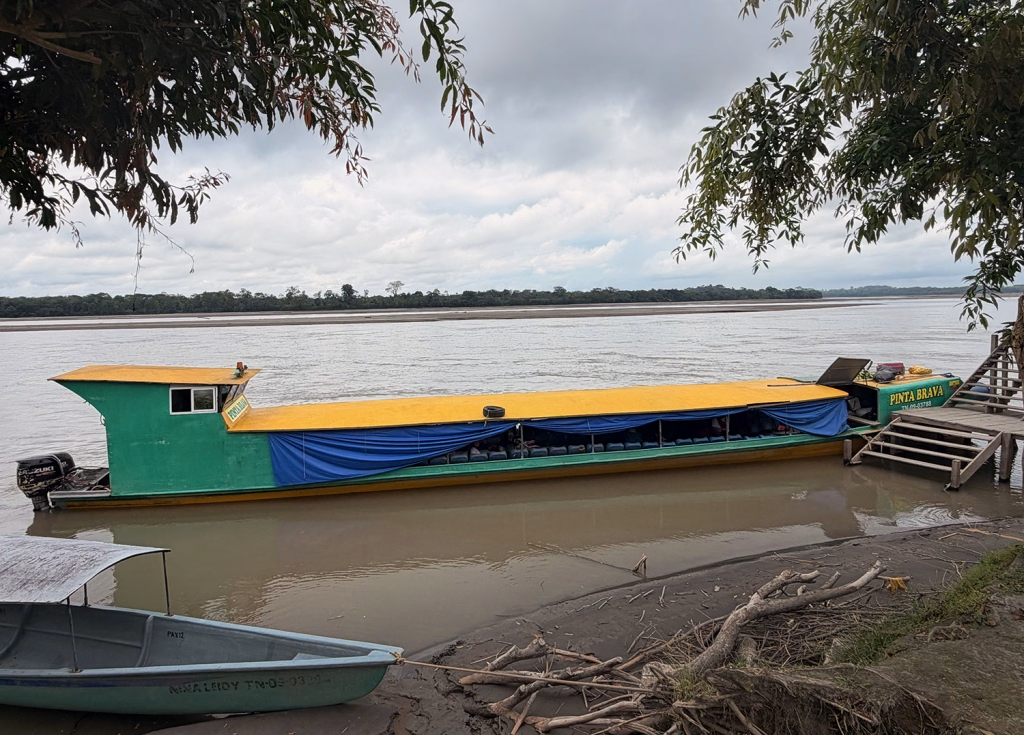
19. Nuevo Rocafuerte to Coca (aka Puerto Francisco de Orellana) Public Fast Ferry (11 hours)
Boat Name: Pinta Brava
Price: US $20 per person
Departure Port Name and Location: Nuevo Rocafuerte (Official Pier) (0°55’13.2″S 75°23’54.3″W)
Accommodation: No assigned seats, first come first served
No meals.
Arrival Port and Location: Puerto Maritimo De Francisco De Orellana (0°28’25.6″S 76°58’56.6″W)
As it turns out, the metal pier we passed on arrival at Nuevo Rocafuerte is the official dock for the town and the place of departure for the public fast ferries, including the Pinta Brava. Right next to the Nuevo Rocafuerte Sign, it can’t be missed.
This boat typically leaves at 6 a.m., so we were there when they opened the doors at 5:30 a.m. The seating configuration is a bit different on this boat, with seats arranged along the sides of the hull and everyone facing toward the interior of the boat. Although they were comfortable for the most part, these seats are permanently reclined and quite slick, causing you to slide out of them throughout the journey. This boat would also be difficult for people with mobility challenges as there are several high metal struts that you must step over to reach the seats.
The boat left right on time, but it stopped at several villages along the way to take on or drop off passengers. About halfway, we stopped for an extended period of time in Pañacocha Ciudad del Milenio so passengers and crew could have lunch (not included). Since we had zero cash left, we settled for more peanuts from our snack bag.
Our boat never got terribly crowded, and it felt more like a commuter route than an adventure. The 11 hours passed quickly, and we arrived in Coca without issue.
20. Coca (aka Puerto Francisco de Orellana) (1 night)
Do note that the two names for this city are used interchangeably. El Coca, or simply Coca, is the common name, but Puerto Francisco de Orellana is the official name. When in doubt, use Coca.
We arrived in the heart of the city’s riverfront and disembarked at 4:30 p.m. Back in a proper city again — and one that was connected to the rest of the world by a road network — we were hungry and needed a bit of familiarity. So, before heading to the hotel, we went straight to a KFC and gorged ourselves. Forgive us for the American fast food chain, but we still had no cash and needed a place that was guaranteed to take credit cards.
After our early dinner, we walked to the Gran Hotel de Lago (US $87 per night), enjoyed a few beers, and absolutely crashed. The hardest travel was over. We had made it.
Almost.
The next morning, we set out to solve our immigration issue. We had been in Ecuador for nearly three days now but still had not officially stamped into the country.
To recall, everyone at the border in Nuevo Rocafuerte had told us that we would need to travel to Coca to officially stamp in. This was a unique experience for me. Never had I traveled so far into a country without legally immigrating, and it was worrisome.
We found little information online about where the immigration office was located, but we did know that it wasn’t at the regional airport since they have no international arrivals. I found an old blog post that put the office within walking distance of our hotel. Ben and I set out after the start of typical business hours to see what we could learn.
The Oficinas de Migracion (0°26’56.8″S 76°59’23.9″W) is located down a disused street in what appears to be an abandoned building. No offense intended, Ecuador. The only sign of life was a single car parked in the lot next to a pile of rubble.
Inside, we found a sympathetic but ultimately unhelpful border official who really didn’t know what to do with us. He couldn’t understand why we didn’t get the entry stamp in Nuevo Rocafuerte. Despite the fact that everyone there told us we had to go to Coca, this official insisted that they were lying to us. The conversation went back and forth several times through Google Translate but always with the same result: we were illegal and had only two options. Either we go back to Nuevo Rocafuerte and get stamped in, or we face a hefty fine (US $421 each) and risk being banned from Ecuador.
Going back to Nuevo Rocafuerte wasn’t an option, especially knowing that everyone there would simply send us back to Coca with no solution. So, we would pay the fine and hope for the best.
To his credit, the official informed us that he couldn’t accept the fine. We would have to pay it in Quito when we left the country. After a lengthy conversation to clarify this process, we learned that the fine would only be paid when and if we returned to Ecuador. The immigration official in Quito would put a note in our passports that the fine was due upon our return to the country.
Despite several calls to try and help us, this guy could provide no more information. Nor could he provide an entry stamp. Sorry. Case closed.
Still skeptical, Ben and I went to the airport looking for an official who spoke English and could perhaps clarify the situation. A wonderful young woman with airport security listened to our explanation and referred us back to the man at the first immigration office. We told her that was a dead end and asked if there was anyone else we could speak to.
She called the police.
To be fair, she didn’t call them to exacerbate the situation but to get an official opinion on what to do next. Within ten minutes, the police chief and his deputy showed up at the airport to question us. They were stoic but polite as the airport security person translated for both parties. We were here illegally but trying to do all of this within the confines of the law. How should we proceed?
Ultimately, the police officers told us the same thing as the original immigration official. If we weren’t willing to return to Nuevo Rocafuerte, then we would simply have to face the music when we tried to fly out of Quito. Good luck. And, with that, they left.
On the positive side, I really thought they might arrest us, and that didn’t happen. On the negative side, the only people who seemed to care that we were in the country illegally were Ben and me. Apathy is its own form of terror.
We left the airport, found an ATM that worked, and went back to the hotel to gather our things before heading to the Terminal Terrestre Coca bus station to find a ride to Quito.
21. Coca to Quito (9 hours via bus)
Bus Company Name: Transportes Baños
Price: US $19 per person
Departure Terminal and Location: Nuevo Terminal Terrestre in Coca (0°26’39.5″S 77°00’08.7″W)
Accommodation: Reserved seats, air conditioning, and nonstop movies in Spanish
Some small snacks and bottled water are included. Vendors will board at stops to offer snacks for purchase.
Arrival Terminal and Location: Terminal Terrestre Carcelén – Quito Norte (0°05’40.1″S 78°28’15.6″W)
There are several companies providing bus service between Coca and Quito, but most of them leave during the morning hours. Because we had spent most of the morning working on our immigration dilemma, we needed a departure that started that afternoon.
By the time we arrived at the Nuevo Terminal Terrestre, there was really only one choice: Transportes Baños, and it turned out to be quite pleasant, if a bit longer than advertised. Most online information will estimate the travel time for this route at just under six hours. It took us nine.
Transportes Baños seems to have the monopoly on late hour departures, with a bus leaving every two hours or so. The seats are comfortable, and the air conditioning is sufficient. Our ticket included bottles of water and some light snacks but no actual meals. Ben and I had replenished our supplies, so this wasn’t a problem for us.
Our bus stopped in Pifo, just east of Quito, and passengers were directed to board either the bus continuing north to Terminal Terrestre Carcelén – Quito Norte, or the one going south to Terminal Terrestre Quitumbe. When you book your ticket in Coca, they will ask at which station you would like to arrive. As it turns out, Ben and I should have just grabbed our luggage during the stop in Pifo and hailed a taxi. The stop in Pifo was closer to the airport and our hotel than either of the two continuing stops. Getting on that second bus cost us nearly two hours of navigating extra city traffic.

22. Quito (1 night)
Although we would eventually be flying out of Quito, this was not yet the end of our journey. However, our late arrival forced us to spend a night here before continuing on to the western coast and our ultimate goal of overlanding South America.
Since we were picking up a rental car at the Quito airport the following morning, we splurged and stayed at the wildly expensive Wyndham Quito Airport (US $167 per night). Worth every penny.
23. Quito to Atacames (6 hours via rental car)
A quick and complimentary airport shuttle to the rental car center the next morning, an easy transaction to pick up our Kia Sportage (US $78 per day) from the locally-owned Goldcar, and we were on the last travel leg of our goal!
The route between Quito and Atacames took us west along Highway 28 through the mountains and then north on the E20 toward Esmeraldes before connecting with the E15 and the exit to our beach hotel. These roads are well-maintained and have plenty of places to stop along the way for food and gas. And the drive through the mountains is quite beautiful.
If we hadn’t been in such a hurry to complete our quest, we would have taken more time to explore along this route.

24. Atacames (2 nights)
We arrived at the Siona Hotel (US $42 per night) in Atacames after sunset. Although we could hear the ocean just a hundred meters away, we decided not to walk to the beach that night. Somehow, that would have felt anticlimactic, completing the quest in the dark.
We walked next door for a late dinner and some very large beers, turned in early, and slept well, knowing that the next day would be awesome.
And so it was! High fives, toasts to a quest realized, and a mad dash into the waves. And then repeat that a few dozen times for the perfect video.
We thoroughly enjoyed both the beach and our stay at the Siona Hotel, making fast friends with the new owners and sharing the story of our adventure with them. If we had enough time, I would have stayed there for a week or more. But flights had already been booked, and we had to leave for Quito again the next day.
25. Back to Quito and Exit (1 night)
The drive back to Quito was uneventful. Ben actually slept for most of it, the adventure essentially done for him.
But I was still worried about our immigration status in Ecuador. We had been in the country for over a week at this point, and the next day would be the moment of truth. Arrested? Fined? Banned from Ecuador for life?
For the sake of convenience, we stayed at the Wyndham near the airport again. We dropped off the car without issue and made our way to airport immigration.
As I approached the counter, I had already resolved to tell the officer that I didn’t have an entry stamp, despite my best efforts to get one. I even had the whole story already typed out in Google Translate, ready to hand her my valid arguments.
She looked through my passport, furrowed her brow, and, in perfect English, asked where I had entered Ecuador. I explained that we had come up the river through Nuevo Rocafuerte and began the whole convoluted story. She stopped me short by holding up her hand and, shaking her head, simply whispered, “Frontera” and stamped us out.

Leave a Reply